
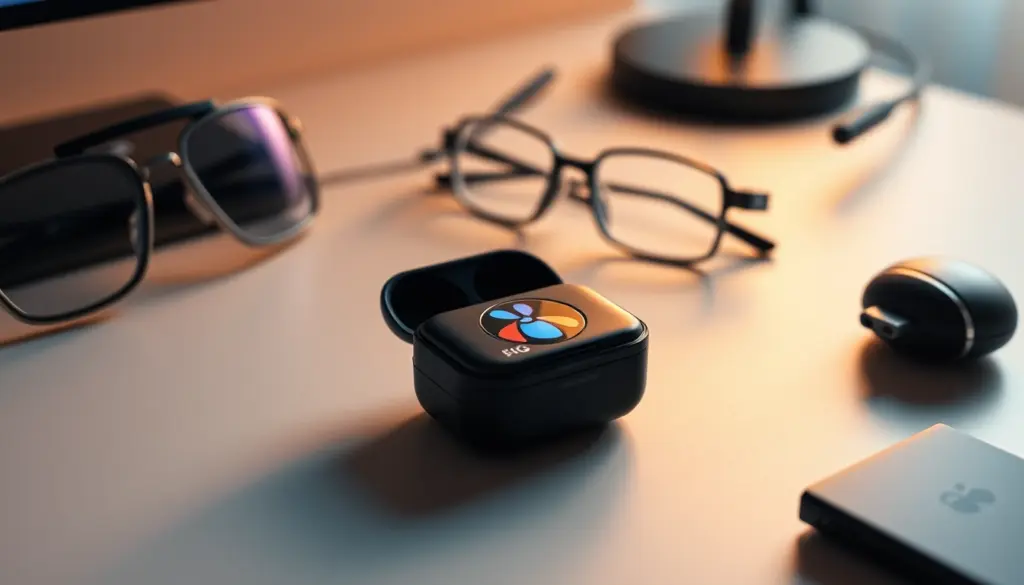
Meta pulled the trigger first. On September 23, 2026, the company unveiled Meta Charm, a handheld AI companion device built to run its Muse assistant, according to Business Insider. It is the clearest sign yet that Mark Zuckerberg’s company wants to own the “device after the smartphone” category before OpenAI, Sam Altman’s much-hyped rival project with former Apple design chief Jony Ive, ships anything at all.
The announcement lands in a year when consumer AI hardware has gone from concept-video vaporware to an actual shelf category. Meta already sells camera-equipped smart glasses, has priced a mixed-reality headset, and now has a pocket-sized gadget with its own screen and cellular radio. OpenAI, by contrast, has said little in public about its hardware plans since striking its deal with Ive’s team. Charm is not a knockout blow, but it is a first mover’s flag planted in ground that both companies have spent two years describing as inevitable.
What Meta Charm actually is
Strip away the marketing language and Charm is a small, screen-equipped companion gadget, not a phone replacement. Meta built it to be roughly the size of an Apple AirPods case, with a touchscreen of about 2 inches that displays a customizable Muse character at its center. It carries built-in 5G connectivity, so it can reach Meta’s AI assistant without pairing to Wi-Fi or a phone. Meta has not disclosed a retail price, and it is targeting a holiday-season launch in December 2026.
That combination of specs tells you what Meta is betting on: an always-connected, low-friction way to talk to Muse throughout the day, worn or pocketed rather than pulled out and unlocked like a phone. It slots next to Meta’s other Muse-carrying hardware, including the Muse assistant’s recent expansion into video avatars, email, and Mac control, which gave the AI system reach into productivity tasks well beyond voice commands.
Charm is not Meta’s only hardware bet this year, and that is arguably the more important story. The company said it plans to have more than 100 styles of AI glasses available by the end of 2026, a scale claim aimed squarely at making AI-enabled eyewear a mainstream accessory category rather than a niche gadget. Charm gives Meta a second, non-eyewear form factor to catch users who don’t want a camera on their face but still want Muse in their pocket.
Meta’s hardware portfolio, piece by piece
Charm did not appear in isolation. It’s the newest addition to a hardware lineup Meta has been assembling piece by piece for over a year, and the timing of each release says something about where the company thinks the market is heading.
On the glasses side, Meta has been running two parallel tracks. One track chases camera-free, audio-first eyewear: Meta Ray-Ban Meta Audio glasses, priced at $349, ship October 13, 2026, and skip cameras entirely in favor of music, calls, and AI voice features. That model followed Meta’s earlier Luna camera-free glasses push, which arrived after Meta had already shipped 7 million camera-equipped units and wanted a privacy-friendly alternative for buyers wary of always-on cameras. Meta also cut prices on other glasses lines this year, a move covered in our report on Meta’s price cut to $249 across 51 new styles, which suggests the company is racing to lower the entry cost of AI eyewear as fast as it expands the catalog.
The other track is display-forward: Meta introduced Ray-Ban Display glasses alongside two performance-oriented lines built with Oakley, positioned for sports and alternative eyewear use rather than everyday lifestyle wear. Pricing and shipping details for those Oakley-branded models were not fully confirmed at launch.
Then there’s the headset end of the lineup. Meta VR Glasses carry a $1,299 price tag, use a separate battery-and-processor puck to keep the headset itself light, and are scheduled for a spring 2027 launch – a timeline we broke down in our coverage of the 100-gram design and its external compute puck. That puck architecture is notable because Charm appears to borrow the same philosophy in miniature: keep the wearable or pocketable piece thin, and push some of the processing or connectivity elsewhere.
| Meta AI hardware product | Form factor | Price | Launch window |
|---|---|---|---|
| Meta Charm | Handheld, AirPods-case-sized, 2-inch touchscreen, 5G | Undisclosed | December 2026 |
| Meta Ray-Ban Meta Audio | Camera-free audio glasses | $349 | October 13, 2026 |
| Meta AI glasses (adventurer line) | Camera-equipped smart glasses, 51 styles | From $249 | 2026 |
| Meta Ray-Ban Display / Oakley Vanguard / Oakley Sphaera | Display and performance eyewear | Unconfirmed | 2026 |
| Meta VR Glasses | Mixed-reality headset with external compute puck, ~100g | $1,299 | Spring 2027 |
Where OpenAI stands, and why the comparison is incomplete
The “Meta beat OpenAI” framing running through this week’s coverage deserves a caveat. OpenAI has been reported as working on consumer hardware, and Ive’s design studio io Products is widely understood to be involved, but there is no confirmed OpenAI product name, no disclosed specification, no price, and no launch date on the public record. What can be said with confidence is narrower: Meta has now announced a shippable device with a stated launch window, and OpenAI has not. That is a real gap, but it is a gap in disclosure and timing, not necessarily a gap in underlying technical progress. OpenAI could still leapfrog Charm with a more capable device next year. It simply hasn’t shown its hand.
That distinction matters for how investors and reporters should read this news cycle. Meta is not winning a race that has a finish line yet, it is setting the pace and forcing the rest of the industry to react on its calendar instead of their own. For a company that spent much of 2023 and 2024 being mocked for Reality Labs losses, moving first on a new device category is as much a narrative win as a product one. Meta’s willingness to ship an unpriced device on a soft December target also hints that the company would rather be in market, imperfect, than wait for a fully polished launch OpenAI might match.
It’s also worth remembering how fast Meta’s own AI agent strategy has moved this year. Muse itself only became a paid consumer product months ago, expanding from a browser and app-based assistant that Amazon later blocked over data and competitive concerns into a system now anchoring three separate hardware lines. That kind of software-to-hardware compression, going from agent launch to a dedicated companion device in under a year, is unusual even by 2026’s accelerated product cycles.
Historical context: how we got to pocket-sized AI hardware
Standalone AI hardware has a rough track record. Humane’s AI Pin and Rabbit’s R1 both launched in 2024 to weak reviews and returns, criticized for slow responses, limited battery life, and unclear reasons to exist alongside a smartphone. Those failures became the standard argument against a “phone companion” category: why carry a second device when your phone already runs the same assistant apps.
Meta’s bet with Charm is different in one meaningful way: it isn’t trying to replace phone functions like calls, at least according to early reporting, which noted the device cannot make phone calls. Instead, it looks positioned as a lightweight, always-on companion to a Muse ecosystem Meta already controls across apps, glasses, and now a headset. That’s a narrower, more defensible pitch than Humane’s “replace your phone” framing, and it means Charm’s success or failure will likely hinge on whether people want a dedicated Muse surface at all, not on comparisons with phone camera quality or app libraries.
The bigger historical shift is that big tech AI hardware bets have compressed rapidly. Where Humane and Rabbit spent years in stealth before launch, Meta is now iterating across multiple device categories inside a single calendar year: glasses price cuts, a camera-free audio line, VR headset pricing, and Charm, all disclosed within months of each other. That pace mirrors how quickly Meta shipped generative features inside its main apps in 2023 and 2024, just applied to physical products instead of software updates.
Market impact and competitive positioning
Meta’s hardware push is happening while the company also builds out its AI compute and partnership commitments elsewhere, a sign that Zuckerberg is treating Muse hardware as a strategic front rather than a side project. Every device Meta ships, camera glasses, audio glasses, a VR headset, and now Charm, feeds usage data back into Muse and creates more surfaces where Meta’s AI is the default rather than a downloaded app competing with ChatGPT or Gemini.
That default-surface strategy is the real competitive stake here, more than any single gadget’s sales figures. OpenAI has scale on the software side, ChatGPT remains the most-used consumer AI assistant by most public usage estimates, but it depends on other companies’ hardware and operating systems to reach users. Apple’s Siri deal, Windows integrations, and browser extensions are all borrowed real estate. Meta, by contrast, is trying to own the glass, the screen, and the assistant end to end. If Charm or its glasses lineup finds even modest adoption, Meta gains something OpenAI currently lacks: a hardware funnel it fully controls.
For competitors, the pressure is now public and dated. Google has its own hardware ambitions through Pixel and Android XR partnerships, and Samsung has shown interest in AI-native wearables, but neither has announced anything resembling Charm’s form factor. OpenAI, meanwhile, faces a choice between rushing a response to preserve the “OpenAI invents the category” narrative it built around the Ive partnership, or staying quiet and risking that Meta defines what an AI companion device is supposed to look like before OpenAI says a word.
| Company | Confirmed consumer AI hardware | Public launch date | Status as of Sept. 25, 2026 |
|---|---|---|---|
| Meta | Charm, Ray-Ban Meta Audio, AI glasses lineup, VR Glasses | Oct. 2026 – Spring 2027 | Announced, partially shipping |
| OpenAI | Rumored device with io Products / Jony Ive | Not disclosed | Unconfirmed, no public specs |
| Pixel hardware, Android XR partnerships | Ongoing, no new standalone AI device confirmed | Existing hardware, no Charm equivalent | |
| Apple | Siri integration on existing devices only | N/A | No standalone AI companion device announced |
The privacy and data questions Charm raises
An always-connected device with its own 5G radio and a persistent AI character on screen is, by design, a device meant to be checked constantly. That raises the same questions that followed Meta’s camera glasses: what gets recorded, what gets sent to Meta’s servers, and how much of it trains future Muse models. Meta’s push toward camera-free audio glasses this year suggests the company is aware of camera-specific privacy backlash and is diversifying its hardware to include options that sidestep it. Charm, with a screen but no camera in its reported spec sheet, fits that same pattern of privacy-conscious hedging.
Still, a screen-based, always-connected companion device raises its own distinct questions around location tracking, voice capture, and how much Meta retains from casual, ambient interactions with Muse throughout the day, questions that were less pressing for phone-based assistants that require an explicit wake word or app open. Regulators in the EU and UK, who have already scrutinized Meta’s AI training data practices, are likely to ask for specifics once Charm ships and its data-handling practices become testable rather than theoretical.
What Charm’s pricing silence signals
Meta’s decision to announce Charm without a price is itself a data point. Companies typically withhold pricing when they are still negotiating component costs, testing market reaction to the product concept first, or both. Given that Meta also hasn’t finalized Charm’s internal component layout according to early reporting, a public price commitment this far ahead of a December ship date would box the company in before manufacturing costs are locked.
It’s a notable contrast with the Ray-Ban Meta Audio glasses, which shipped a firm $349 price alongside their announcement, and the VR Glasses, priced at $1,299 well ahead of their spring 2027 launch. Charm’s silence on price suggests Meta sees it as the least mature product in its current hardware slate, announced now for competitive positioning against OpenAI rather than because it was fully retail-ready.
Timeline: how the Charm announcement unfolded
The sequencing of Meta’s 2026 hardware announcements matters almost as much as the products themselves, because it shows a company stacking launches to keep Muse in the news cycle continuously rather than saving everything for one event.
| Date | Announcement |
|---|---|
| Earlier 2026 | Meta cuts AI glasses pricing to $249, expands catalog toward 51-plus styles |
| Earlier 2026 | Meta VR Glasses priced at $1,299 for a spring 2027 launch |
| September 2026 | Meta Muse gains video avatars, email, and Mac control features |
| September 23, 2026 | Meta unveils Charm, a handheld Muse companion device |
| October 13, 2026 | Ray-Ban Meta Audio glasses ship at $349 |
| December 2026 | Charm’s targeted holiday launch window |
How Wall Street and analysts are reading the move
Coverage of Charm from outlets including The Verge and TechCrunch has framed the device less as a standalone product bet and more as a positioning move in the broader AI assistant race, echoing how those same outlets covered Meta’s earlier glasses price cuts and the VR headset reveal. That framing lines up with Meta’s own pattern this year: announce early, iterate on pricing and specs later, and use each release to keep Muse ahead of ChatGPT and Gemini in the news cycle even when a product isn’t fully retail-ready.
The absence of a confirmed OpenAI hardware timeline, tracked by outlets including TechCrunch’s OpenAI coverage, has left analysts comparing Meta’s shipping roadmap against rumor rather than against a rival’s own announced specs. That asymmetry is exactly what gives Meta’s September 23 announcement outsized weight: it is the only concrete data point either company has put on the record this year for a pocket-sized AI companion device.
Predictions: where this goes next
A few things look likely over the next two to three quarters, based on Meta’s release cadence this year and the pattern of prior AI hardware launches:
- Meta will disclose Charm’s price closer to its December 2026 ship date, likely positioned under $200 to encourage impulse adoption alongside existing Muse subscriptions, though this figure is not yet confirmed by Meta.
- OpenAI faces growing pressure to say something concrete about its hardware timeline before the holidays, even a teaser, to avoid ceding the “first AI device” narrative entirely to Meta.
- Expect further glasses price cuts from Meta as the company tries to build out its 100-plus-styles goal by year-end 2026, following the pattern already seen with the drop to $249.
- Early Charm reviews will likely focus on battery life and whether a screen-based companion device offers enough over voice-only glasses to justify carrying a second Meta gadget.
- Regulatory attention, particularly in the EU, will likely follow Charm’s actual shipping date rather than its announcement, once data practices can be tested rather than described.
Why this matters beyond the gadget
Strip out the device specs and Charm is really a statement about how Meta wants the next phase of the AI assistant war to be fought: not just in chatbot benchmarks and API pricing, but in who controls the physical surface people reach for first. Software competitors like OpenAI, Anthropic, and Google can match or beat Muse on raw model capability, but none of them currently sell a dedicated consumer device built around their assistant. That’s the gap Meta is trying to close before anyone else even opens the conversation.
Whether Charm actually sells is almost secondary to what it signals: Meta is willing to ship first, unpriced and unfinished by its own account, just to hold the “first mover” position in AI hardware. That’s a bet Zuckerberg has made before with Reality Labs, at a much higher cost and a much longer payoff horizon. Charm is a cheaper, faster version of the same wager.
Frequently asked questions
What is Meta Charm?
Meta Charm is a handheld AI companion device, announced September 23, 2026, built around Meta’s Muse assistant. It is about the size of an Apple AirPods case, with a roughly 2-inch touchscreen and built-in 5G connectivity.
When does Meta Charm launch?
Meta is targeting a holiday-season launch in December 2026. The company has not disclosed a final price.
How much does Meta Charm cost?
Meta has not announced pricing for Charm as of this report.
Does Meta Charm have a camera?
Early reporting on Charm’s specifications does not describe a camera, and the device is reportedly unable to make phone calls.
Has OpenAI announced a competing device?
No. OpenAI has been linked to a consumer hardware project involving former Apple design chief Jony Ive and his studio io Products, but no product name, specifications, price, or launch date has been confirmed publicly.
What other AI hardware has Meta released in 2026?
Meta’s 2026 hardware lineup includes camera-free Ray-Ban Meta Audio glasses at $349 (shipping October 13, 2026), an expanded AI glasses catalog starting at $249, and Meta VR Glasses priced at $1,299 for a spring 2027 launch.
Is Meta actually ahead of OpenAI in AI hardware?
Meta is ahead in public disclosure and stated launch timing. Because OpenAI’s device plans remain unconfirmed, it is not possible to say definitively which company is further along in actual development.
Will Meta Charm work without a phone nearby?
Charm’s built-in 5G connectivity is designed to let it reach Muse independently of Wi-Fi, though Meta has not detailed full standalone functionality ahead of its December 2026 launch.