
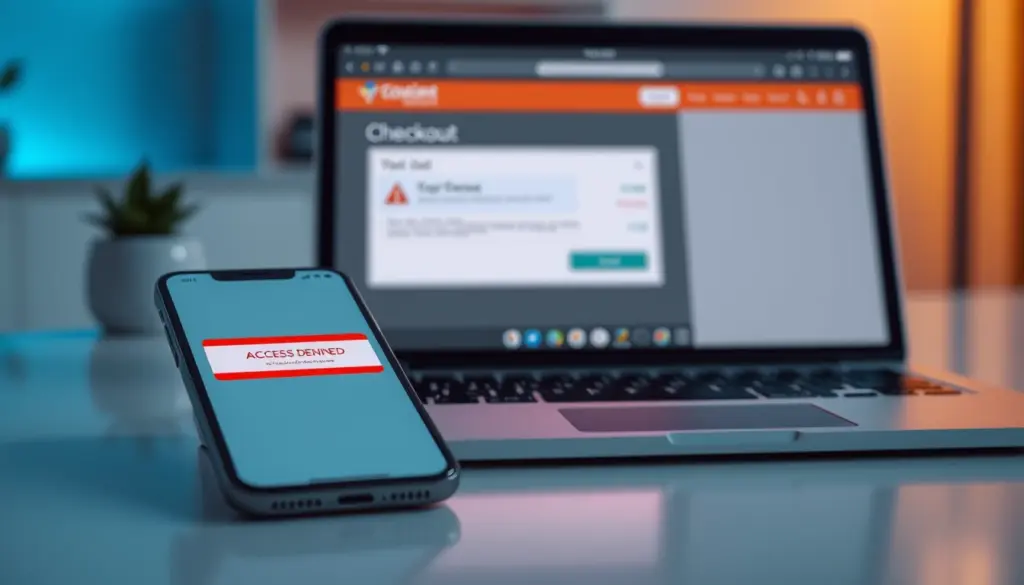
Amazon shut the door on Meta’s newest AI agent this weekend, and it did so in public. Starting Sunday night, September 20, shoppers who tried to buy something through Meta’s Muse personal assistant on Amazon.com hit a popup instead of a checkout screen. The message was blunt: continued access by an unauthorized AI agent violates Amazon’s Conditions of Use, to which customers have agreed. It’s the clearest sign yet that the fight over who gets to shop on your behalf, a human or a bot working for a rival tech company, has moved from policy memos into live product breakage.
The block matters beyond the two companies involved. Muse is Meta’s answer to a wave of “personal AI agent” products that promise to browse, compare, and buy on a user’s behalf, a category that also includes Meta’s own Muse launch tier priced between $20 and $100 a month. Amazon runs the largest online storefront in the US, and it just told one of the best-funded AI labs in the world that its agent isn’t welcome. That’s a preview of how the next round of the browser wars gets fought: not with search rankings, but with server-side blocks against software that pretends to be a person.
What Amazon Actually Did to Meta’s Muse
According to reporting from Gizmodo and GeekWire, Amazon began serving the block to Muse users on the night of September 20, 2026. Anyone attempting to complete a purchase through Muse on Amazon.com now sees an on-screen notice instead of an order confirmation. The wording, quoted consistently across multiple outlets, reads: “Continued access by an unauthorized AI agent violates Amazon’s Conditions of Use, to which our customers have agreed.”
Amazon spokesperson Lara Hendrickson confirmed the move in a statement to Gizmodo, framing it as a matter of fair play rather than a one-off grudge against Meta. “Third-party applications that offer to make purchases on behalf of customers from other businesses should operate openly and respect service provider decisions about whether or not to participate,” Hendrickson said, according to Gizmodo’s report. She added a second, sharper line: “Agentic third-party applications such as Muse have the same obligations, and we’ve requested that Meta remove Amazon from the experience.”
That second sentence is the crux of the dispute. Amazon isn’t simply objecting to AI agents in the abstract, it’s saying it asked Meta directly to carve Amazon out of Muse’s shopping capabilities, and Meta didn’t comply. The block followed only after that request went nowhere, based on reporting from GeekWire and a syndicated wire report picked up by the Economic Times.
Timeline: How the Standoff Escalated
The public dispute compressed into a matter of days, but the underlying tension between Amazon and third-party shopping agents has been building for most of 2026 as agentic commerce tools multiplied. Here’s how the key moments line up based on current reporting:
| Date / Period | Event |
|---|---|
| Throughout 2026 | Amazon maintains and enforces Conditions of Use language barring unauthorized automated purchasing agents and bots from its retail site. |
| Prior to Sept. 20 | Amazon says it approached Meta and asked the company to exclude Amazon.com from Muse’s agentic shopping experience. |
| Prior to Sept. 20 | Meta does not remove Amazon from Muse’s scope, according to Amazon’s account of events. |
| Sunday night, Sept. 20, 2026 | Amazon begins serving a blocking popup to Muse users attempting checkout on Amazon.com. |
| Sept. 20-21, 2026 | Gizmodo, GeekWire, and wire services (via Economic Times) confirm the block and publish Amazon’s statement. |
| Sept. 21, 2026 | Meta has not issued a detailed public rebuttal specific to the Amazon block as of this writing. |
Why Amazon Says It Pulled the Trigger
Amazon’s public framing rests on three stated concerns: security, privacy, and transparency. Each maps to a specific complaint about how Muse behaves on the site, based on the reporting Amazon has provided to journalists covering the block.
On transparency, Amazon says Muse does not identify itself as an AI agent while browsing the site, meaning it presents to Amazon’s systems the same way a regular logged-in shopper would. On privacy and security, Amazon says Muse appears to capture and store customer login credentials and scrape account data as part of completing purchases. On process, Amazon says Meta gave no advance notice that Muse would be browsing or shopping on Amazon’s platform at all, before the agent was already live and interacting with the site.
Put together, that’s a company saying: an agent we didn’t approve, that doesn’t announce itself, appears to be handling our customers’ login details without our sign-off. Whether or not Meta disputes the specifics, the sequencing (agent goes live, Amazon objects privately, agent stays, Amazon blocks it publicly) is not in serious dispute across the outlets covering the story.
Amazon’s Conditions of Use and the Bot Rulebook
Amazon has long prohibited third-party automated agents and bots from making purchases on its platform without authorization, a rule baked into its Conditions of Use rather than something invented for this dispute. What’s new in 2026 is the sheer number of products trying to test that boundary. A “personal AI agent” that logs into a retail account and completes an order isn’t a scalping bot buying sneakers in bulk, but from a platform-rules standpoint, Amazon is treating it the same way: as an automated actor operating under a human’s credentials without the platform’s blessing.
That distinction matters for every AI lab building a shopping agent right now. Amazon’s statement to Gizmodo, and the “agentic third-party applications… have the same obligations” line specifically, reads as a warning shot aimed past Meta at the entire category. Any agent that wants to transact on Amazon going forward will likely need an explicit, negotiated integration rather than the ability to just log in and click buy on a user’s behalf.
What Muse Actually Is and Why It Went After Amazon
Muse is Meta’s personal AI agent product, positioned as software that understands a user’s goals and preferences well enough to act on simple tasks, shopping included. Meta has iterated on the product quickly since its debut, adding features like custom voice options and pairing it with underlying models such as Muse Spark for agentic tasks. The pitch, in Mark Zuckerberg’s own words, is expansive: “Everyone will have an exceptionally capable personal agent that understands you, your goals, and everything you care about,” Zuckerberg said in comments reported by tech industry coverage of Meta’s personal-agent push.
Shopping is one of the most obvious use cases for that kind of agent, and Amazon is the largest single storefront in the US by a wide margin. An agent that can’t shop Amazon is missing the retailer most people actually use. That’s presumably why Muse kept trying to operate there even after Amazon’s private request, and it’s also why Amazon’s public block carries real product weight rather than being a symbolic gesture.
Meta’s Security Framing and the Agents Rule of Two
Meta has not issued a detailed rebuttal to Amazon’s specific claims as of this writing, but the company’s published approach to agent security offers useful context for how it likely sees the dispute internally. Meta’s AI safety team has previously described a framework it calls the Agents Rule of Two, published on the company’s official AI blog: “At a high level, the Agents Rule of Two states that until robustness research allows us to reliably detect and refuse prompt injection, agents must satisfy no more than two of the following three properties within a session to avoid the highest impact consequences of prompt injection,” Meta wrote in a post on practical AI agent security.
Separately, in comments to CNBC about the broader public scrutiny facing personal AI agents, Meta described its testing process for Muse: “We’ve hardened Muse based on extensive dogfooding, agentic red teaming, and against issues found in real adversarial scenarios by security researchers in our private bug bounty program,” the company said, according to CNBC’s coverage from earlier this month. That statement predates the Amazon block by about two weeks, but it shows Meta was already fielding questions about Muse’s security posture before this specific dispute became public.
Neither of those statements directly addresses Amazon’s claim that Muse doesn’t identify itself as an agent, or that it captures login credentials during shopping sessions. That gap is worth watching: if Meta responds specifically to those two claims, it will tell us a lot about whether this is a policy disagreement or a genuine security dispute.
The Competitive Landscape: Agentic Shopping in Late 2026
Muse isn’t the only AI agent trying to shop on a user’s behalf, and Amazon’s response to Meta sets a marker for how it might treat the rest of the field. The category has grown crowded through 2026, with major labs racing to ship agents that can browse, compare prices, and check out. Security posture has become a genuine differentiator, not just a marketing line, especially after incidents at other platforms drew scrutiny to how these agents handle credentials and site access.
| AI Shopping Agent | Company | Status on Amazon.com (as of Sept. 21, 2026) |
|---|---|---|
| Muse | Meta | Blocked from completing purchases; popup shown since Sept. 20 |
| Personal AI agent products (general category) | Multiple labs | Subject to Amazon’s Conditions of Use restrictions on unauthorized automated purchasing |
| Amazon’s own agent tools | Amazon | Authorized by definition; operates within Amazon’s own systems |
The table above is deliberately conservative. Amazon has not published a full list of which specific third-party agents are blocked versus tolerated, and no verified reporting currently details how rival agents are being treated on Amazon.com. What is confirmed is Amazon’s general Conditions of Use position: automated agents shopping without authorization aren’t permitted, and Meta’s Muse is now the highest-profile enforcement case. Given how aggressively Amazon has litigated bot access in the past, other agent makers should expect similar scrutiny if their products start showing up in Amazon’s server logs behaving like unauthenticated bots wearing a human’s login.
Historical Context: Retailers Have Fought Bots Before
Amazon blocking automated purchasing isn’t a new instinct, it’s an old one aimed at a new target. Retailers have spent more than a decade fighting scalper bots that buy up sneakers, game consoles, and concert tickets faster than any human can click. Amazon itself has previously taken legal and technical action against bot operators who used automated scripts to snap up inventory for resale. The difference this time is that the “bot” isn’t a script written by a reseller trying to flip PS5s, it’s a mainstream consumer product built by one of the largest software companies on earth, marketed as a helpful assistant rather than a scalping tool.
That reframing is exactly what makes this dispute harder to resolve quietly. Amazon can’t treat Muse the way it treats an anonymous scalping script, because Meta has both the leverage and the incentive to fight back publicly, and because millions of Meta’s own users may eventually expect Muse to work everywhere they shop. The stakes for both companies are proportionally higher than a typical bot crackdown, which is likely part of why this became a public standoff instead of a quiet technical fix.
Market Impact for Meta: A Setback for Muse’s Utility
For Meta, losing Amazon access strikes at the core value proposition of a shopping-capable personal agent. Muse is priced as a subscription product, reportedly in the $20 to $100 monthly range depending on tier, and subscribers paying for an agent that can shop for them will notice immediately if it can’t complete a purchase on the single largest online retailer in the country. That’s a real product gap, not a cosmetic one.
It also complicates Meta’s broader agent strategy at a moment when the company has been pushing Muse’s capabilities aggressively, including security architecture choices meant to differentiate it from rivals. A public dispute over credential handling undercuts exactly the kind of trust message Meta has been trying to build around Muse. If Amazon’s specific claims (no self-identification, credential capture, no advance notice) hold up under further scrutiny, Meta faces a harder question than just losing one retailer: whether its agent’s default behavior across the web needs a redesign, not just an Amazon-specific patch.
Market Impact for Amazon: Defending the Checkout Moat
For Amazon, the block is as much about defending its own data and merchandising control as it is about security. If AI agents from other companies can freely shop Amazon on a user’s behalf, Amazon loses visibility into browsing behavior, recommendation engagement, and the upsell moments built into its own checkout flow. An agent that logs in, buys the specific item requested, and logs out skips all of the discovery and cross-sell mechanics Amazon has spent two decades optimizing.
There’s also a straightforward competitive angle: Meta is not a neutral shopping app, it’s a company building its own AI ecosystem in direct competition with Amazon’s own AI ambitions. Handing Meta’s agent unrestricted access to Amazon’s storefront, on Amazon’s own systems, without a negotiated commercial arrangement, would be an unusual concession for Amazon to make to a company it competes with on ads, attention, and increasingly AI products. The security and transparency framing gives Amazon defensible cover for a decision that also happens to protect its commercial interests.
The Bigger Fight: Who Controls the Agentic Checkout
Strip away the specifics of Muse, and this is a fight about who gets to sit between a shopper and a “buy” button. Every major platform holder has an incentive to keep that position for itself. Amazon wants shoppers using Amazon’s interface, its own AI shopping features, and its own recommendation logic. Meta wants shoppers routing purchases through Muse, generating engagement and utility inside Meta’s own ecosystem. Neither company benefits from ceding that layer to the other, regardless of how the security argument shakes out.
That’s why this dispute is unlikely to end with a simple technical fix. Even if Meta addresses every specific complaint Amazon raised, self-identification headers, credential handling, advance notice, Amazon still has a commercial reason to gatekeep third-party agent access. Expect the resolution, whenever it comes, to look more like a negotiated commercial agreement (with terms, revenue share, or data-sharing conditions attached) than a simple software patch that reopens the door for free.
What Comes Next: Five Predictions
- Meta issues a direct response. Given the specificity of Amazon’s claims about credential handling and self-identification, expect Meta to publish a more detailed statement addressing those points directly, rather than only general security framing like the Agents Rule of Two.
- Other retailers watch closely. Large e-commerce platforms beyond Amazon are likely evaluating their own exposure to agentic shopping tools right now, and some may quietly tighten bot-detection rules rather than wait for a public incident of their own.
- Agent self-identification becomes a standard ask. Whether through industry norms or platform-specific requirements, expect more retailers to demand that AI agents identify themselves via headers or metadata rather than mimicking human browsing sessions.
- A negotiated deal is more likely than a permanent ban. Given Meta’s scale and Amazon’s interest in not looking anti-innovation, a commercial arrangement that reinstates limited, disclosed Muse access is a more probable long-term outcome than an indefinite block.
- Regulatory attention follows. A dispute this visible, between two of the largest tech companies in the world, over automated access to a dominant marketplace, is the kind of story that draws interest from antitrust and consumer-protection regulators even without either company filing a formal complaint.
What Shoppers Using Muse Should Know Right Now
If you’re a Muse user who tried to buy something on Amazon.com this week and hit a popup instead of a checkout screen, that’s expected behavior under the current block, not a bug on your end. Amazon’s notice is intentional and applies broadly to Muse sessions attempting purchases, not to a specific account or item. In the meantime, completing the purchase manually through Amazon’s own app or website, rather than routing it through Muse, is the reliable workaround while the two companies work out (or don’t work out) a longer-term arrangement.
It’s also worth understanding that this block is specific to purchasing, based on current reporting, rather than a blanket ban on Muse referencing or discussing Amazon products at all. The dispute centers on Muse’s ability to log in and transact, which is the piece of the workflow Amazon controls directly through its own site infrastructure.
Why This Sets a Precedent for AI Agent Access Everywhere
The Amazon-Muse standoff is likely to be cited for years as the moment a major platform drew a hard, public line against a rival’s AI agent. Companies building agentic products, including those working on agent security in adjacent categories like coding tools and those chasing benchmark performance like OpenAI’s exploit-testing work on its Astra models, are watching how this plays out because the same access questions apply well beyond shopping. Any agent that logs into a third-party service on a user’s behalf, whether to buy a product, book a flight, or manage an account, is subject to the same fundamental question Amazon just answered with a popup: does the platform being accessed get a say, or does the agent maker get to decide unilaterally?
Amazon’s answer, at least for now, is that it gets a say, and it’s willing to break the product experience publicly to make that point. Given the size of both companies involved, that answer is likely to shape how the rest of the AI agent industry approaches third-party platform access for the remainder of 2026 and into 2027.
Frequently Asked Questions
Why did Amazon block Meta’s Muse AI agent?
Amazon says it blocked Muse from completing purchases on Amazon.com over security, privacy, and transparency concerns, including claims that Muse doesn’t identify itself as an AI agent, that it appears to capture and store customer login credentials, and that Meta gave no advance notice before Muse began shopping on the platform.
When did the Amazon block on Muse start?
The block began on the night of Sunday, September 20, 2026, when Amazon started serving a popup notice to Muse users attempting to complete purchases.
What does the Amazon popup message say?
The notice reads: “Continued access by an unauthorized AI agent violates Amazon’s Conditions of Use, to which our customers have agreed.”
Did Amazon try to resolve this with Meta before blocking Muse?
Yes. Amazon says it approached Meta and requested that Amazon.com be excluded from the Muse experience before implementing the block, and that the block followed only after Meta did not remove Amazon from Muse’s scope.
Can Muse still be used to shop on Amazon at all?
Based on current reporting, the block applies to completing purchases through Muse on Amazon.com. Shoppers can still buy items directly through Amazon’s own app or website while the dispute is unresolved.
Has Meta responded to Amazon’s specific claims?
As of this writing, Meta has not issued a detailed public response addressing Amazon’s specific claims about credential handling and self-identification. Meta has previously published general agent-security frameworks, including its Agents Rule of Two, and has described hardening Muse through red-teaming and its bug bounty program.
Are other AI shopping agents facing similar blocks on Amazon?
No verified reporting currently confirms Amazon has taken the same public action against other AI shopping agents. Amazon’s general Conditions of Use restrict unauthorized automated purchasing broadly, and Muse is currently the most prominent enforcement case.
Could Amazon and Meta reach a deal to restore Muse’s access?
That outcome hasn’t been confirmed by either company, but a negotiated commercial arrangement is a plausible path forward given both companies’ incentives to eventually resolve the dispute rather than maintain an indefinite standoff.