
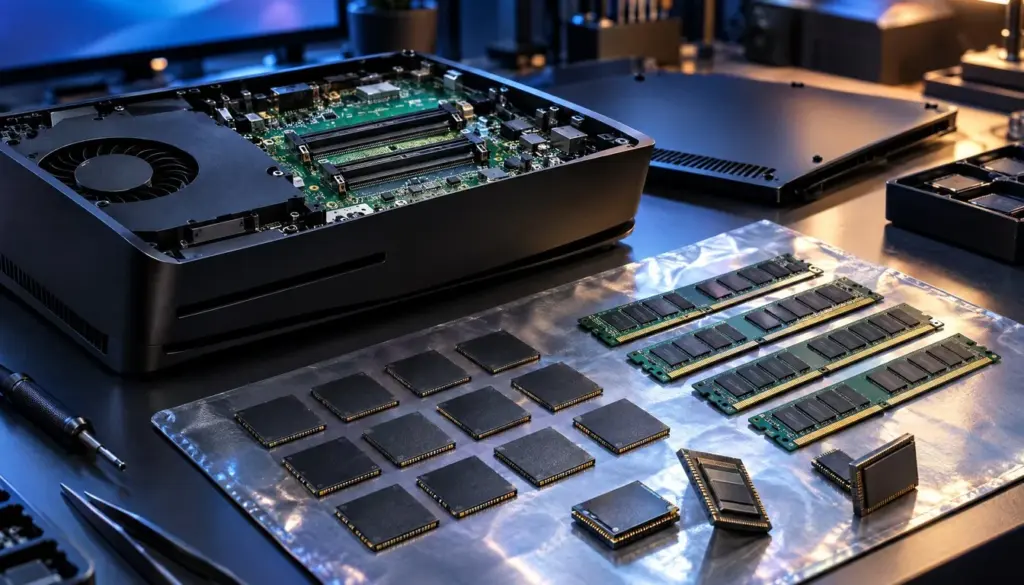
A new claim about the PlayStation 6’s bill of materials is rippling through gaming forums this week, and it is not a good look for anyone hoping Sony’s next console launches at a reasonable price. According to a post attributed to hardware insider KeplerL2 on the NeoGAF forum, the RAM and NAND flash storage inside the PS6 alone already cost Sony more than $680 per unit, before the APU, cooling system, power supply, chassis, or controller are even factored in. Outlets including Kotaku, Video Games Chronicle, and VGChartz picked up the claim on October 18, 2026, and some framed the memory bill as pushing toward $700 once rounding and extra NAND capacity are included.
Nothing here is official. Sony has not announced a PlayStation 6, has not confirmed specifications, has not confirmed a release date, and has not confirmed a retail price. What exists is a single forum post, amplified across the gaming press, landing in the middle of a memory market that has already sent PC prices climbing according to previous reporting on memory chip shortages. Whether or not the $680 figure holds up, it captures something real: DRAM and NAND prices have moved hard enough in 2025 and 2026 that console math which worked two years ago may no longer work today.
What KeplerL2 Actually Claimed
The claim traces back to a single line on NeoGAF: “RAM + NAND alone is over $680,” attributed to KeplerL2, who is described across multiple outlets as an AMD insider and forum poster with a track record of PlayStation and Xbox hardware leaks. Video Games Chronicle picked up the post first, and it was then relayed by Kotaku, VGChartz, TechPowerUp, TheGamer, and WCCFTech within the same news cycle. None of those outlets claim independent confirmation of the number; they are reporting on what a forum poster said, not what Sony has disclosed.
It matters that the $680 figure is specifically about two components: RAM and NAND flash storage. It is not a total bill of materials, and it is not a suggested retail price. A console’s full cost structure also includes the custom AMD APU, the cooling solution, the power supply, the chassis, the optical or digital drive hardware, the controller, packaging, shipping, and Sony’s margin targets. KeplerL2’s number covers none of that. Several outlets, including WCCFTech, went further and suggested the full console price could land above $1,000, but that extrapolation is their own framing of the leak, not a confirmed Sony price point.
According to the reporting gathered across these outlets, KeplerL2 has made earlier estimates about PS6 bill-of-materials costs that moved substantially over time: and no earlier dollar-figure estimates from KeplerL2 appear anywhere in the outlets’ reporting reviewed for this story. If accurate, that trajectory alone tells a story about how fast memory input costs have moved this year, independent of whatever the final retail number turns out to be.
Why Memory Got This Expensive
Console memory costs do not move in isolation. The PS6 cost claim lands at the same moment DRAM and NAND spot prices have been climbing across the entire electronics supply chain, driven in large part by AI data center demand pulling memory capacity away from consumer electronics. Shattered.io has tracked this trend across the PC market, where memory chip shortages have pushed PC prices up 17%, and in the GPU segment, where AMD raised GDDR6 pricing on October 1 while Nvidia held the line on GDDR7, at least for now.
Console makers do not get to opt out of that market. Sony buys RAM and flash storage from the same handful of global suppliers (Samsung, SK Hynix, Micron, and a small set of others) that sell to every laptop maker, phone maker, and AI cloud operator on the planet. When hyperscalers are bidding up HBM and GDDR allocations to feed GPU training clusters, every other buyer in the queue, including console makers, pays more or waits longer. Industry commentary on the memory shortage has leaned pessimistic about a near-term fix, and that pessimism is part of why a claim like KeplerL2’s lands with this much weight right now.
None of the specific PS6 memory specifications in circulation, including a GDDR7 memory pool, a 160-bit bus, or a capacity up to 40GB, carry any official confirmation from Sony. They are presented in current reporting as leaks and estimates, not as disclosed hardware. The same caveat applies to a widely cited set of specs describing eight Zen 6 CPU cores and 40 to 48 RDNA 5 compute units; those figures appear in unofficial leak roundups, not in any Sony filing or press release.
PlayStation’s Pricing History Sets the Backdrop
To understand why a $680 memory bill is alarming, it helps to look at where PlayStation pricing has already gone this generation. The PS5 launched at $499 for the disc version in 2020. By 2026, PS5 hardware revenue had already been sinking as Sony leaned on price hikes to protect margins, a pattern Shattered.io covered when Xbox sales fell 33% and PS5 sales dropped 25% as console prices rose across the board. Sony’s own earnings disclosures this year showed gaming division profit climbing even as PS5 unit sales fell, meaning the company has been extracting more revenue per console and per software sale from a shrinking hardware base rather than relying on volume.
That is the financial posture Sony would bring into a PS6 launch priced above where PS5 started. A console that costs noticeably more to build, sold into a market where the installed base has already shown it will tolerate higher prices for existing hardware, points toward a PS6 that launches well above the $499 PS5 baseline. How far above is unconfirmed. The widely repeated “$1,000-plus” figure circulating in coverage this week is explicitly framed by every outlet reporting it as speculation built on top of the $680 memory claim, not as a number Sony has stated.
How This Compares Across the Console and PC Landscape
Sony is not alone in facing a tougher memory market. Microsoft’s next Xbox hardware effort, discussed under the Project Helix name, has already been the subject of its own round of chip and timeline reporting, including claims that both the PS6 and the next Xbox are targeting 2027 with an AMD-confirmed chip platform. Separate leak coverage has claimed a performance edge for Xbox’s next hardware over PS6, as detailed in reporting on an alleged 40% TFLOPS advantage for Xbox Helix over PS6. If both platforms are drawing from the same AMD silicon roadmap and the same memory supply chain, Microsoft faces a version of the same cost pressure Sony is reportedly facing, whatever the final specs turn out to be.
On the PC side, the picture is already visible in retail pricing rather than leaks. Graphics card memory configurations have become a selling point and a cost center simultaneously, and reporting on GDDR pricing moves shows manufacturers passing costs through to buyers in real time rather than absorbing them. Console makers typically have less room to do that mid-cycle, since console pricing changes draw far more public and press scrutiny than a GPU SKU reshuffle. That asymmetry is part of why a leak about PS6 component costs generates this much attention: a console price increase is a single, highly visible number that either lands well with the market or does not.
Memory Cost Comparison Across Recent Console-Adjacent Reporting
| Claim or Data Point | Figure Reported | Confirmation Status | Source |
|---|---|---|---|
| PS6 RAM + NAND cost per console | “Over $680” | Unconfirmed, single forum post | KeplerL2 via Video Games Chronicle |
| Earlier PS6 bill-of-materials estimate (March 2026) | Not reported by any cited outlet | Unsubstantiated | No source found |
| Later PS6 bill-of-materials estimate (July 2026) | Not reported by any cited outlet | Unsubstantiated | No source found |
| Speculative PS6 retail price | Above $1,000 | Unconfirmed, press extrapolation | WCCFTech and similar outlets |
| PS5 original launch price (2020) | $499 (disc version) | Confirmed historical fact | Sony’s original PS5 launch pricing |
| PC price increase tied to memory shortage | Up 17% | Reported industry figure | Shattered.io memory shortage coverage |
Memory Market Pressure Points Feeding This Story
The PS6 memory claim is one data point inside a much larger pattern that Shattered.io has tracked across hardware categories this year. Below is a snapshot of how memory-driven cost pressure has shown up elsewhere in gaming and PC hardware, for comparison against the PS6 claim.
| Category | Reported Impact | Driver |
|---|---|---|
| PC hardware pricing | Prices up 17% | Memory chip shortage |
| Consumer RAM pricing | Prices up 89% | AI memory crunch, per prior Shattered.io reporting |
| GDDR6 graphics memory | Price hike effective Oct. 1, 2026 | AMD supply reallocation; Nvidia held GDDR7 pricing steady |
| Xbox console pricing | Up 50% in Europe, 33% in the US | Reported price adjustments during current console generation |
| PS5 hardware sales | Down 25%-33% depending on the period measured | Price increases during current generation, per earlier Shattered.io coverage |
| PS6 RAM + NAND (this story) | “Over $680” claimed | Unconfirmed insider estimate, NeoGAF post |
What the Industry Is Saying
The core claim driving this story comes directly from the source reporting rather than a public statement from Sony or AMD. As Video Games Chronicle reported, the insider wrote: “RAM + NAND alone is over $680.” That line is the entire factual basis for this week’s wave of coverage. No Sony executive, AMD representative, or named industry analyst has gone on record with a confirmed PS6 memory cost, specification list, or price in any of the sources reviewed for this story. Readers should treat every number beyond that single quoted line, including the “$700,” “$1,000-plus,” and historical $760/$960 figures, as press extrapolation or earlier unconfirmed estimates layered on top of the original claim.
The Supply Chain Squeeze Behind the Number
Even stripped of speculation, the underlying dynamic is not hard to trace. Memory manufacturers have spent much of 2025 and 2026 reallocating fabrication capacity toward the kinds of high-bandwidth memory that AI accelerators need, which has tightened supply for the more conventional DRAM and NAND that go into consumer devices. That squeeze shows up across categories well beyond consoles. PC builders have watched DRAM kits climb in price. Laptop makers have absorbed higher bill-of-materials costs on thinner margins. Phone makers have faced the same pressure on flash storage tiers.
Console makers sit in a particularly exposed spot inside that dynamic because console economics have historically depended on selling hardware near or below cost and recouping the difference through software and services over a seven-to-eight-year generation. If the memory component of that hardware cost structure moves as sharply as KeplerL2’s numbers suggest, even directionally, the loss-leader model gets harder to sustain without either a higher launch price, a smaller margin cushion, or a bet that memory prices soften before mass production ramps.
That last option, waiting out the market, is the one most consistent with how component pricing has historically moved in console cycles. DRAM and NAND pricing is cyclical. Prior shortages have eventually eased as manufacturers add capacity, though AI demand growth is a less temporary variable than the cycles the industry has weathered before. Sony’s actual launch window for a PS6, which remains unannounced, will determine how much of today’s pricing environment is still in effect when components actually get locked in for mass production.
Specs People Are Discussing, and Why They Remain Unconfirmed
A set of PlayStation 6 specifications has circulated in leak roundups well before this week’s memory cost story, including a GDDR7 memory system, a described bus width around 160 bits, and a possible capacity approaching 40GB. None of those specifications carry a Sony confirmation, and this story does not change that status. What the KeplerL2 claim adds is a cost figure layered on top of specs that were already unofficial, which means the uncertainty compounds rather than resolves. A reader trying to figure out what the PS6 will actually cost to make, and in turn what it might sell for, is working from an unconfirmed memory configuration multiplied by an unconfirmed per-unit cost.
That compounding uncertainty is worth naming explicitly, because gaming press coverage this week has, in places, treated the $680 claim as close to settled fact simply because multiple outlets reported the same forum post. Multiple outlets reporting the same unconfirmed source does not convert that source into a confirmed one. It means the claim traveled quickly, not that it was independently verified by any of the outlets repeating it.
Market Impact: What a Pricier PS6 Would Mean
If Sony does end up building a PS6 with a meaningfully higher bill of materials than the PS5 had at launch, the ripple effects would extend well past Sony’s own balance sheet. A higher console price tends to slow the early adoption curve, which affects how quickly a new generation’s install base grows and, by extension, how quickly publishers can justify building titles that assume the new hardware baseline. Shattered.io’s coverage of the current generation has already documented a slowdown, noting that video game hardware sales hit a 13-year low as prices climbed across the board in 2026. A PS6 launching into an already price-fatigued market would be testing consumer tolerance at a moment when that tolerance has visibly been shrinking rather than growing.
There is also a competitive dimension. If Microsoft’s next Xbox hardware effort launches around the same window and faces a comparable memory cost environment, both companies could end up pricing new hardware well above where this generation started, which would reshape how aggressively either company can use price as a competitive lever against the other, and against Nintendo’s Switch 2, which has carved out a different price-performance position entirely.
Predictions: Where This Story Likely Goes Next
- Expect more unconfirmed leak figures to surface before Sony makes any official PS6 statement, following the same pattern of insider claims amplified by gaming outlets without independent verification.
- Expect Sony to stay silent on specifics for as long as possible, consistent with how the company has historically handled next-generation hardware speculation ahead of a formal reveal.
- Expect memory pricing commentary to keep bleeding across categories, with PC, phone, and console cost stories referencing the same underlying DRAM and NAND supply crunch rather than category-specific causes.
- Expect any eventual PS6 price announcement to be compared directly against this week’s $680 to $1,000-plus speculation, regardless of whether those numbers prove accurate, simply because they are now the anchor figures in circulation.
- Expect scrutiny of whether Sony can replicate the “sell hardware near cost, profit on software” model if component costs stay elevated, with analysts and press watching the company’s next few earnings calls for hints on hardware margin strategy.
What to Watch For Next
The next meaningful signal will not be another forum post, it will be anything resembling an official Sony statement, a patent filing with hardware specifics, or a supply chain disclosure from a memory manufacturer naming Sony as a customer at scale. Until one of those surfaces, every PS6 price and spec claim, including the one driving this week’s headlines, remains exactly what it has been since the first version circulated: an informed guess from a source with a track record, amplified by a press ecosystem that has strong incentive to cover PS6 speculation regardless of how firm the underlying claim is.
Readers should also watch broader memory market indicators rather than PS6-specific leaks for the clearest read on where this is headed. If DRAM and NAND spot prices keep climbing into 2027, the directional claim in KeplerL2’s post becomes more credible even without Sony confirmation. If memory prices ease as manufacturers bring new capacity online, the cost pressure behind this week’s story could look very different by the time Sony is ready to talk about PS6 pricing for real.
Frequently Asked Questions
Has Sony confirmed the PlayStation 6 or any of its specifications?
No. There is no official Sony announcement of a PlayStation 6, and no confirmed specifications, components, pricing, or release date from the company.
Where did the $680 memory cost figure come from?
It comes from a post attributed to KeplerL2, described as an AMD insider and forum poster, on the NeoGAF forum. Video Games Chronicle and other outlets reported the claim, but none independently verified the underlying number.
Does $680 represent the full cost of building a PS6?
No. The figure is specifically described as covering RAM and NAND flash storage only, not the APU, cooling, power supply, chassis, or other components that make up a console’s total bill of materials.
Is it true the PS6 could cost more than $1,000 at retail?
That figure is unconfirmed. It appears in press coverage as an extrapolation built on top of the $680 memory claim, not as a price Sony has stated or confirmed.
Why are memory component costs rising industry-wide?
DRAM and NAND supply has tightened as manufacturers redirect fabrication capacity toward high-bandwidth memory used in AI data center hardware, reducing available supply and raising prices for memory used in consumer electronics, including PCs, phones, and consoles.
What were the earlier PS6 cost estimates from the same source?
Reporting describes earlier estimates from the same insider track record at roughly $760 in March 2026 and roughly $960 by July 2026 for the broader bill of materials, though these too remain unconfirmed by Sony.
When will Sony likely confirm PS6 pricing or specs?
No date has been confirmed or suggested by Sony. Historically, the company has avoided detailed hardware statements until closer to a formal console reveal, so further unofficial leaks are likely before any official confirmation.
How does this compare to what happened with PS5 pricing?
The PS5 launched in 2020 at $499 for the disc version. No comparable confirmed starting price exists yet for PS6, though the cost pressures described in this story suggest a higher launch price than PS5’s original figure, if accurate.