
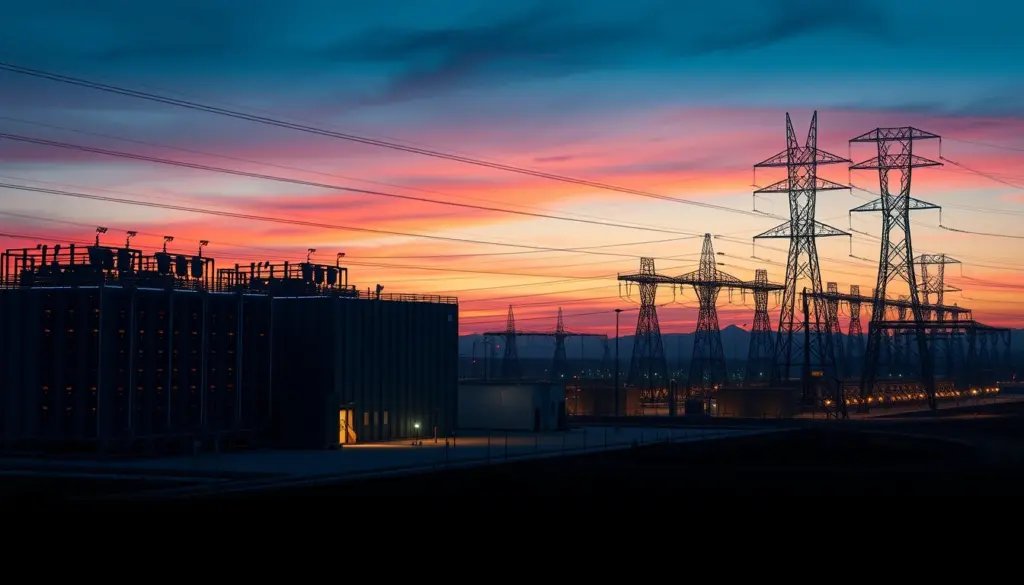
Seven of the biggest names in American tech signed a one-page pledge at the White House on March 4, 2026, promising that the electricity bill for the AI boom won’t land on ordinary households. Amazon, Google, Meta, Microsoft, OpenAI, Oracle, and xAI put their names on the “Ratepayer Protection Pledge,” agreeing to build, bring, or buy the power their data centers need and to cover the grid upgrades required to connect them. Seven months later, the companies are still training models, leasing chips, and signing power deals at a pace that makes the pledge look more like a political statement than a line item on anyone’s balance sheet.
The timing matters. Data center electricity demand has become one of the most visible pressure points in the AI race, and state regulators, utilities, and voters have all started asking the same question: who pays when a hyperscaler asks a utility to build a new power plant. The pledge is the administration’s answer, but as outlets including the White House fact sheet, BBC, and Power Magazine have all noted since, the document raises as many questions as it answers.
What the Ratepayer Protection Pledge Actually Says
Strip away the ceremony and the pledge rests on a handful of specific commitments. According to the White House fact sheet, the seven signatories agreed to build, bring, or buy new generation resources and electricity sufficient to meet their own data center demand, rather than drawing on capacity that would otherwise serve homes and small businesses. They also agreed to pay for all new power-delivery infrastructure upgrades tied to their facilities, including substations, transmission links, and distribution work that a utility would otherwise have to fold into general rates.
A third piece covers how the money actually moves. Each company agreed to negotiate separate electricity-rate structures directly with utilities and state governments, instead of relying on standard commercial tariffs designed for ordinary businesses. That detail is the clearest sign the pledge is meant to function state by state, through individual rate cases, rather than as a single national rule.
The Seven Signatories, Side by Side
The pledge covers a mix of cloud giants, model developers, and hardware operators, each with a different AI power footprint. The table below lines up the signatories with the broader AI infrastructure moves shattered.io has tracked this year, since a company’s data center energy posture rarely shows up in isolation from its chip and cloud strategy.
| Company | Core AI/Cloud Business | Related Infrastructure Move |
|---|---|---|
| Amazon | AWS cloud, Bedrock AI, Trainium chips | $8B Nvidia chip leaseback deal |
| Google Cloud, Gemini models, custom TPUs | Suncatcher orbital compute wager | |
| Meta | Llama models, in-house AI data centers | Meta-driven Nasdaq AI rally |
| Microsoft | Azure cloud, OpenAI infrastructure partner | HPE/AMD Helios cloud capacity deal |
| OpenAI | ChatGPT, GPT model training clusters | Compute buildout tied to Oracle and Microsoft capacity |
| Oracle | Oracle Cloud Infrastructure, OpenAI compute host | Rising DRAM costs for cloud buildouts |
| xAI | Grok models, Colossus training supercomputer | Data center capex race |
The Clause That Protects Utilities: Pay Even If You Don’t Use It
The most consequential line in the pledge is also the easiest to miss. Per the White House release, signatories agreed to pay the negotiated rates for power and related infrastructure brought online to serve their data centers “whether they use the electricity or not.” That single clause does more work than the rest of the document combined, because it directly targets the scenario utilities fear most: a hyperscaler asks for a gigawatt of new capacity, the utility finances a plant or transmission line around that request, and then the AI company scales back, delays, or cancels the project, leaving the utility holding a stranded asset that other customers end up subsidizing.
Public Power, the trade association representing community-owned utilities, framed the pledge in exactly those terms, describing it as a mechanism tied to protecting ratepayers from exactly that kind of forecast risk. The take-or-pay structure isn’t new to utility regulation. Large industrial customers have signed similar arrangements for decades. What’s new is applying it at the scale AI data centers now require, with commitments that can run into the hundreds of megawatts for a single campus.
Why Washington Moved on This Now
Electricity affordability turned into a live political issue well before the pledge was signed. AI data centers draw far more power per square foot than a typical commercial building, and because that demand is concentrated in specific regions and often arrives faster than permitting and construction timelines can absorb, the cost of new generation and grid upgrades has started showing up on residential bills in the states where hyperscalers are building fastest.
CNN’s coverage of the signing placed it squarely inside the administration’s pre-midterm affordability push, describing the event as part of a broader effort to get ahead of voter frustration over rising utility costs. Taylor Rogers, a White House spokeswoman, put the political framing directly: “Under this bold initiative, these massive companies will build, bring, or buy their own power supply for new AI data centers, ensuring that Americans’ electricity bills will not increase as demand grows,” according to the Nextgov report on the signing.
The July Expansion: Governors and Utilities Join In
The pledge didn’t stay static after March. On July 23, 2026, the White House broadened the initiative to bring in state governors, utilities, and data center developers beyond the original seven signatories, according to sector reporting that tracked the expansion. That move signals the administration wants the pledge to function less like a one-time photo opportunity and more like a standing framework that state-level actors can opt into as new data center projects get announced.
It also shifts where the real enforcement happens. Governors don’t set utility rates, but they influence siting, tax incentives, and economic development deals that often come bundled with data center announcements. Bringing them into the pledge formally ties state-level incentive packages to the same “ratepayer protection” language used at the federal level, even though the pledge itself remains voluntary rather than a binding regulation in any of those states.
What the Pledge Does Not Say
Read the fact sheet closely and the gaps are as notable as the commitments. The announcement did not include a total dollar figure for the infrastructure the seven companies plan to fund. It did not include a combined megawatt target, a company-by-company breakdown, a fixed number of data centers covered, or a deadline for bringing replacement generation online. Power Magazine’s analysis flagged this directly, pointing out that the pledge establishes a cost-allocation principle without a published procurement schedule to back it up.
That absence isn’t necessarily a flaw. Rate structures, infrastructure costs, and procurement timelines are the kind of detail that gets negotiated utility by utility, state by state, in proceedings that can take months or years to finalize. But it does mean that anyone citing the pledge as proof electricity bills are already protected is getting ahead of what the document actually guarantees. The enforceable version of this commitment, if it exists, will show up in state utility commission filings, not in a White House press release.
How Utilities and Analysts Are Reacting
The reaction from the utility sector has been cautiously supportive, with a consistent caveat. The underlying principle, that large new industrial loads should pay their own incremental costs rather than spreading them across the general customer base, lines up with how utilities have handled big single-site customers for years through special contracts and minimum-bill clauses. What’s missing, according to the trade press, is clarity on how a voluntary federal pledge translates into something a state public utility commission can actually enforce.
Because state commissions, not the federal government, approve retail electricity rates, the pledge’s real test will play out in dozens of separate regulatory dockets over the coming year. A hyperscaler can sign a pledge in Washington and still end up in a contested rate case in Ohio, Georgia, or Virginia, where local advocates argue the negotiated terms don’t go far enough to shield existing customers from congestion costs or reliability risk tied to a single massive new load.
Market Impact: Power Costs Join the AI Capex Conversation
The pledge arrives at a moment when energy has become one more line item in an AI infrastructure spending cycle that already looks historically large. Companies that once competed mainly on chip supply and cloud capacity are now competing on power contracts too, and that shift is visible across the deals shattered.io has covered this year, from HPE’s $1.2 billion AMD Helios cloud deal to Nebius raising AI cloud prices as memory costs climb. Power isn’t a side issue in those deals anymore, it’s a design constraint that shapes where a data center gets built and how fast it can come online.
For investors, the pledge is a signal that the political risk around AI power demand is being managed proactively rather than left to fester into a regulatory fight. That matters because utility-related backlash has already slowed or complicated data center projects in multiple states this year. A company that can point to a federal pledge, plus a negotiated state rate structure, has a cleaner path through local opposition than one still negotiating from scratch.
Historical Context: Big Industrial Loads Have Done This Before
Utilities have dealt with oversized single customers long before AI showed up. Steel mills, aluminum smelters, and chemical plants have all negotiated special contracts, demand charges, and exit fees designed to keep one enormous customer from distorting rates for everyone else. The “pay whether you use it or not” language in the Ratepayer Protection Pledge draws directly on that older playbook of take-or-pay arrangements built to protect utilities from stranded investment.
What’s different this time is speed and scale. A smelter negotiates once and runs at a relatively stable load for decades. A hyperscaler can announce a new campus, scale it past the original plan within a year, and then shift workloads to a different region entirely if chip supply, power availability, or cost dynamics change. Utilities have never had to plan around industrial customers that move that fast, which is part of why this pledge exists as a public commitment rather than a quiet bilateral contract.
Competitive Comparison: Pledge Versus No Pledge
Not every company building AI infrastructure signed the pledge, and that split is worth tracking. Chipmakers, colocation operators, and smaller cloud providers that supply capacity to the signatories weren’t part of the original seven, even though their facilities often sit downstream of the same power constraints. The table below breaks down where the commitment currently stands.
| Date | Event | Source |
|---|---|---|
| March 4, 2026 | Amazon, Google, Meta, Microsoft, OpenAI, Oracle, and xAI sign the Ratepayer Protection Pledge at the White House | White House, Reuters |
| March 4-5, 2026 | Fox News, CNN, BBC, and LA Times report on the signing and the affordability context | Named outlets |
| July 23, 2026 | White House expands the pledge framework to governors, utilities, and data center developers | Sector reporting |
| October 5, 2026 | No company-specific dollar or megawatt figures have been made public under the pledge | Status as of this report |
That gap, between a seven-company federal pledge and the much larger universe of firms building AI power demand, is where the next phase of this story will likely play out. Expect pressure on non-signatories to either join a future expansion round or explain why they haven’t.
State Commissions Are Where This Gets Decided
A federal pledge signed in the Rose Garden doesn’t automatically become a line item on anyone’s electricity bill. Retail electricity rates in the US are set state by state, through public utility commission proceedings that weigh cost allocation, reliability, and consumer protection separately in every jurisdiction. That means the pledge’s actual impact depends on dozens of individual negotiations between hyperscalers, utilities, and regulators, most of which will happen well outside national headlines.
Some of those proceedings are already underway in states with heavy data center concentration, where local consumer advocates have pushed utilities to formalize large-load tariffs that mirror the pledge’s language, including minimum-purchase commitments and extended contract terms. Whether those tariffs end up matching the spirit of the federal pledge, or fall short of it, will be the real measure of whether the commitment holds up.
What Happens If a Company Doesn’t Follow Through
Because the pledge is voluntary and not a binding federal rule, there’s no statutory penalty described in the public materials for a company that signs and then doesn’t deliver on build, bring, or buy commitments. Enforcement, to the extent it exists, would have to come through the contracts each company signs individually with utilities and state regulators, the same mechanism that already governs most large industrial power agreements.
That puts real weight on how aggressively state commissions write those contracts. A weak large-load tariff leaves ratepayers exposed even if a company technically honored the spirit of the White House pledge. A strict one, with real take-or-pay terms and infrastructure cost recovery built in, gives the pledge teeth regardless of what happens at the federal level.
Predictions: Where the Ratepayer Protection Pledge Goes From Here
Five things look likely to shape how this story develops over the next year.
- State utility commissions become the real battleground, with large-load tariffs in states like Georgia, Ohio, and Virginia doing more to shape actual electricity costs than the federal pledge itself.
- Expect company-specific dollar and megawatt figures to leak out through state regulatory filings over the next 12 months, filling the gap the March announcement left open.
- More companies join future rounds of the pledge as the July expansion framework matures, likely including major colocation and chip infrastructure firms that weren’t part of the original seven.
- Watch for renewed congressional interest in making parts of the pledge enforceable at the federal level if voter frustration over electricity costs doesn’t ease before the midterms.
- Expect scrutiny over whether “new” generation claimed under the pledge is genuinely additional capacity or existing plants being reclassified, a distinction analysts have already flagged as a weak point in the framework.
Frequently Asked Questions
What is the Ratepayer Protection Pledge?
It’s a voluntary agreement signed at the White House on March 4, 2026, under which seven tech and AI companies committed to build, bring, or buy the power their data centers need and to cover the related grid infrastructure costs themselves.
Which companies signed the Ratepayer Protection Pledge?
Amazon, Google, Meta, Microsoft, OpenAI, Oracle, and xAI signed on March 4, 2026. The pledge was expanded on July 23, 2026, to include governors, utilities, and data center developers beyond the original seven.
Is the pledge legally binding?
No. It’s described in official materials as a voluntary commitment, not a federal regulation. Enforcement depends on the individual contracts each company negotiates with utilities and state regulators.
Will my electricity bill go up because of AI data centers?
The pledge is designed to prevent that by requiring signatories to pay for new generation and infrastructure themselves. Whether it works depends on how state utility commissions write the actual rate tariffs, which hasn’t been fully resolved everywhere data centers are being built.
What does “pay whether or not they use the electricity” mean?
It’s a take-or-pay style clause requiring signatories to pay for power and infrastructure brought online for their data centers even if the project is later delayed, scaled back, or canceled, protecting utilities and other customers from stranded-asset costs.
When was the pledge expanded, and to whom?
On July 23, 2026, the White House expanded the Ratepayer Protection Pledge to bring in state governors, utilities, and data center developers, broadening it beyond the original seven corporate signatories.
Does the pledge include specific dollar or megawatt commitments?
No. As of this report, no company-specific dollar figures, combined megawatt targets, or procurement deadlines have been published under the pledge. Those details, if they emerge, are more likely to surface through state utility filings than federal announcements.
How is this different from a typical electricity regulation?
Regulations are enforceable rules set by federal or state agencies. This pledge is a voluntary commitment with no stated statutory penalty for non-compliance, meaning its real-world effect depends on how state commissions translate it into binding utility contracts and tariffs.