
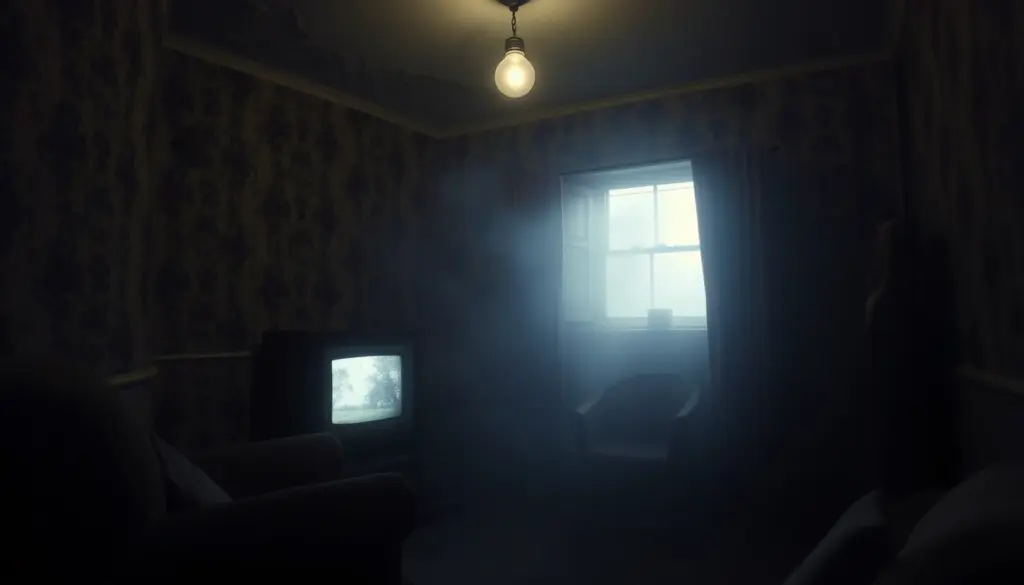
September 24, 2026 — Silent Hill: Townfall is out today, and the early conversation around it has taken a strange turn. Developer Screen Burn Interactive built a game with a fog-choked Scottish island, a protagonist named Simon Ordell, and a promise to “put things right.” But the detail sticking in players’ heads after the first wave of hands-on impressions isn’t a monster design. It’s the wallpaper.
Across gaming coverage this week, outlets including PC Gamer, VGC, Polygon, GamesRadar, and PushSquare have all landed on the same framing: the dated, oppressive domestic interiors scattered through Townfall‘s world feel more unsettling than the creatures stalking them. It’s an odd hook for a horror game built by a studio that had every incentive to sell its monster roster first. Instead, the story of launch day is a game where the scariest room in the house might just be the sitting room.
What Ships Today: Silent Hill: Townfall’s Vital Stats
Konami Digital Entertainment, Inc. and Annapurna Interactive are co-publishing Silent Hill: Townfall, with development handled by Screen Burn Interactive. The game arrived on PlayStation 5, Steam, and the Epic Games Store on September 24, 2026. The Standard Edition runs $49.99 (£44.99 / €49.99 / ¥7,480), while the Deluxe Edition adds a 48-hour early access window for $59.99. Here’s the full rundown of what launched today.
| Detail | Information |
|---|---|
| Title | Silent Hill: Townfall |
| Developer | Screen Burn Interactive |
| Publishers | Konami Digital Entertainment, Inc. and Annapurna Interactive |
| Release date | September 24, 2026 |
| Platforms | PlayStation 5, Steam, Epic Games Store |
| Setting | St. Amelia, a desolate island |
| Protagonist | Simon Ordell |
| Standard Edition price | $49.99 / £44.99 / €49.99 / ¥7,480 |
| Deluxe Edition price | $59.99 |
| Deluxe Edition bonus | 48-hour early access |
| Steam store listing date | September 23, 2026 (one day ahead of the official date) |
That last row is a small but real wrinkle: Steam’s own listing pointed to a September 23 release, a day earlier than the date Konami and Annapurna have publicly confirmed. It’s a minor scheduling mismatch rather than a scandal, but it’s already fueling confusion among players trying to figure out exactly when their pre-load unlocks.
A Scottish Island Called St. Amelia
Unlike the fog-bound American town that gave the franchise its name, Townfall is set on St. Amelia, described in the game’s own marketing as a desolate island. That’s a geographic and cultural pivot for a series that has, until now, stayed rooted in the fictional Silent Hill itself or, in last year’s Silent Hill f, moved to 1960s Japan. Screen Burn Interactive is instead building its horror around a specifically British, coastal sense of isolation.
According to the PlayStation Blog, “Launching September 24 on PlayStation 5, Silent Hill: Townfall marks the latest entry in the iconic psychological horror franchise.” That framing matters: Sony and Konami are treating this less as a spinoff experiment and more as a mainline continuation of what the series does best, even while relocating its geography entirely.
Simon Ordell’s Promise to “Put Things Right”
The protagonist, Simon Ordell, is called back to St. Amelia to “put things right,” per the game’s own official description. It’s a deliberately vague hook, the kind of line the Silent Hill franchise has used since its original 1999 release to imply guilt, unfinished business, and a past the player character would rather not confront directly. Screen Burn Interactive hasn’t detailed the specifics of what Ordell left behind on the island, and Konami has kept plot details tightly wrapped ahead of launch.
That restraint is consistent with how Konami handled marketing for last month’s review cycle, where the publisher leaned on atmosphere and setting rather than plot spoilers. It’s a pattern that’s held across the franchise’s recent revival, and it puts even more weight on the environments themselves to carry the dread before players ever learn why Ordell is really back.
Why Screen Burn Interactive Went First-Person
Townfall breaks from the over-the-shoulder camera that defined 2024’s Silent Hill 2 remake, opting instead for a first-person perspective. Speaking about that choice, developer Jon McKellan told interviewers: “The decision to go first-person was there right from the start for a couple of reasons,” according to an interview posted on X. That’s a notable departure for a franchise that built its modern reputation on third-person exploration, and it changes how much of the environment a player actually has to look at, and for how long.
A first-person camera forces sustained attention on whatever’s directly in front of the player, including furniture, wallpaper patterns, and the layout of a room. That’s a meaningful design lever if a studio wants domestic spaces, not just creature encounters, to carry the horror load. Whether that was Screen Burn Interactive’s explicit intent or a side effect of the perspective shift, it’s clearly shaping how players and critics are talking about the game today.
The CRTV and the Diegetic Horror of Analog Tech
Part of what’s driving the “it’s the decor, not the monsters” narrative is a piece of in-game technology Screen Burn Interactive has nicknamed the CRTV, a retro cathode-ray display mechanic woven into how players interact with the world. McKellan explained the design philosophy behind it plainly: “We wanted to keep things diegetic,” he said in the same X interview referenced above.
He expanded on why that analog, in-world approach unsettles players in a separate conversation with PCGamesN at Gamescom: “It gives you this sense that it’s a bit real, or a bit fragile, or it might switch off at any minute.” That’s the throughline connecting the CRTV mechanic to the wider décor conversation. A flickering television in a room with peeling floral wallpaper reads as more mundane and more dangerous than a jump-scare monster, precisely because it looks like something that could exist in an actual house.
The Real Monster: How British Interior Design Became the Scare
Here’s the throughline critics keep returning to: St. Amelia’s houses look lived-in, dated, and specifically British in a way few horror games bother to render. Dim overhead lighting, cramped hallways, and furniture that looks pulled from a real, unremarkable home create a texture of dread that doesn’t rely on a single creature design. It’s horror through familiarity rather than horror through spectacle, and it’s a harder effect to manufacture on purpose.
That’s the throughline that’s turned into a genuine talking point across launch-day coverage: several outlets are running some version of the argument that the game’s monsters, while competently designed, aren’t what’s sticking with players after a session. It’s the rooms. Screen Burn Interactive hasn’t officially confirmed this reaction as an intended design goal, and specific claims about individual furniture pieces, wallpaper patterns, or design references beyond what’s shown in official trailers remain unverified. But the pattern in how critics are describing their play sessions is consistent enough that it’s shaping the game’s entire launch narrative.
From PC Gamer to PushSquare: How Outlets Are Framing the Décor Angle
What makes this angle notable isn’t one outlet’s hot take, it’s how many separate newsrooms landed on similar framing independently around the same launch window. PC Gamer, VGC, Polygon, GamesRadar, and PushSquare have all published coverage this week built around the idea that the game’s setting design outperforms its monster design as a source of dread. That kind of convergence, across outlets that don’t typically coordinate coverage angles, is usually a sign that something in the actual game is producing a consistent reaction rather than a single writer’s stylistic choice.
It’s also a useful reminder of how horror criticism has shifted over the past decade. A game doesn’t need a viral monster design to generate conversation anymore. Environmental storytelling, the kind that made Townfall’s review scores a mixed bag last month, is increasingly treated as the primary craft metric critics use to judge whether a horror title actually works.
Historical Context: Environmental Dread Across the Silent Hill Franchise
None of this is new territory for the franchise, even if the specific execution is. Silent Hill built its original reputation in the late 1990s and early 2000s on fog, rust, and decaying interiors doing as much narrative work as its creature designs. The original games used environmental degradation, peeling paint, dripping water, and claustrophobic hallways, as a direct visual metaphor for the protagonists’ psychological states. Monsters were almost secondary to the atmosphere the levels themselves generated.
That tradition carried into 2024’s Bloober Team-developed Silent Hill 2 remake, which leaned heavily on updated lighting and environmental detail to modernize the original’s dread without losing its slow-burn pacing. Last year’s Silent Hill f took the opposite geographic approach, relocating the series to 1960s Japan and building its horror around a different set of cultural and architectural cues. Townfall’s British-coded interiors are, in that light, less a departure from franchise tradition than a continuation of it, just with the accent moved from American rust-belt decay to UK domestic gloom.
Competitive Comparison: Townfall vs Recent Silent Hill Entries
Townfall arrives into a franchise that’s had an unusually active two years. Between the Silent Hill 2 remake, Silent Hill f, and now Townfall, Konami has released three meaningfully different takes on the series inside 24 months, each with its own camera perspective, setting, and studio behind it.
| Game | Developer | Release Year | Perspective | Setting |
|---|---|---|---|---|
| Silent Hill 2 (Remake) | Bloober Team | 2024 | Third-person, over-the-shoulder | Fictional US town of Silent Hill |
| Silent Hill f | NeoBards Entertainment | 2025 | Third-person | 1960s Ebisugaoka, Japan |
| Silent Hill: Townfall | Screen Burn Interactive | 2026 | First-person | St. Amelia, a British/Scottish-coded island |
That spread of developers is itself a story. Konami has effectively turned Silent Hill into a multi-studio anthology rather than a single team’s franchise, similar in structure to how Control Resonant’s launch relied on a different internal team than the original Control. It’s a strategy that spreads risk across studios but also means quality and tone can swing noticeably between entries, which is exactly the kind of variance critics have flagged across Townfall’s early review cycle.
The Steam Date Confusion: One Game, Two Release Dates
Worth flagging again on launch day itself: Steam’s own store listing pointed to a September 23, 2026 release, a full day ahead of the September 24 date Konami and Annapurna have officially confirmed across their press materials. For a mid-tier horror release without the marketing budget of a AAA blockbuster, that kind of date mismatch creates real confusion for players trying to plan pre-loads, streams, or day-one purchases around a specific unlock time.
It’s a small operational hiccup rather than a meaningful story on its own, but it’s the kind of detail that tends to compound frustration when it lands during the same week reviewers are already split on the game’s overall quality.
Konami and Annapurna’s Publishing Gamble
Pairing Konami with Annapurna Interactive is itself a notable move. Annapurna has built its reputation on curated, artistically distinct indie and mid-budget titles rather than legacy horror franchises, making this one of the more unusual publishing partnerships attached to a mainline Silent Hill release. It signals that Konami is looking beyond its own in-house marketing muscle to reach an audience that might not automatically associate with the franchise’s older, more traditional survival-horror image.
That dual-publisher structure also puts more pressure on today’s launch numbers than a typical Konami-only release would carry. Both companies have reputational and financial stakes riding on how St. Amelia performs commercially over its first weeks on sale.
Market Impact: What Townfall’s Reception Means for Horror Gaming
If the “décor is scarier than the monsters” narrative holds through the first weeks of player feedback, it has real implications beyond one game’s launch window. Horror studios have spent the better part of two decades chasing bigger, more grotesque creature designs as a shorthand for scare quality. A commercially successful game that gets more attention for its wallpaper than its monster roster would be a meaningful data point for studios weighing where to spend their art budgets on the next horror project.
It also reinforces a trend that’s been building across the genre for a few years: environmental and set design teams are increasingly treated as co-leads on horror projects rather than support staff working under a creature design lead. Games built around mundane, recognizable spaces, a kitchen, a sitting room, a stairwell, cost less to iterate on than a roster of unique monster models, and Townfall’s early buzz suggests that trade-off can pay off critically even when a game’s review scores land in mixed territory, the same split-decision pattern seen in Marvel’s Wolverine’s launch reception and Fire Emblem: Fortune’s Weave’s review cycle earlier this year.
What Developers and Critics Are Saying
The clearest public comments on Townfall’s design philosophy so far come from developer Jon McKellan, who has spoken about the choices behind the game’s perspective and its retro-tech mechanics in the run-up to launch.
“The decision to go first-person was there right from the start for a couple of reasons.”
Jon McKellan, game developer, via interview posted on X
“We wanted to keep things diegetic.”
Jon McKellan, game developer, via interview posted on X
“It gives you this sense that it’s a bit real, or a bit fragile, or it might switch off at any minute.”
Jon McKellan, game developer, via PCGamesN
Taken together, those comments trace a straight line from a camera decision to a mechanic decision to the exact reaction critics are having on launch day. The first-person perspective forces sustained attention on the environment. The diegetic CRTV mechanic asks players to trust analog, fallible technology inside that environment. The combined effect is a game engineered to make ordinary rooms feel unstable, which is precisely the sensation outlets are describing when they call the interior design scarier than the monsters.
Five Predictions for Silent Hill: Townfall’s First Month
- The décor narrative will outlast launch week. With five separate outlets already converging on the same framing, expect think-pieces and retrospective video essays on Townfall’s interior design to keep circulating well past the first sales window.
- Player feedback will split along the same lines as critic reviews. Given the mixed scores already reported around the game’s launch, expect user reviews on Steam to show a similarly divided pattern rather than a runaway consensus in either direction.
- Screen Burn Interactive will address the perspective shift directly in post-launch interviews. Given how central the first-person camera has become to the game’s identity, expect the studio to keep leaning into that talking point in press appearances over the coming weeks.
- The Steam date mismatch gets quietly corrected. Expect Valve’s store listing to be updated to match the official September 24 date within days, with no formal statement from Konami or Annapurna.
- Other horror studios take note of the environmental-design angle. If Townfall’s sales hold up despite mixed reviews, expect competitors to publicly emphasize set and interior design in their own marketing for upcoming horror titles.
Why This Matters Beyond One Game’s Launch Day
Horror games live or die on whether their scares feel earned rather than manufactured. A creature roster can be technically impressive and still fail to unsettle anyone if the spaces around it feel generic. Townfall’s early reception suggests Screen Burn Interactive found a different lever to pull, betting that a first-person camera pointed at ordinary, dated British rooms would do more psychological work than another monster silhouette ever could.
Whether that bet pays off commercially is still an open question on launch day itself. But it’s already reshaping how critics are talking about the game, and that alone makes Townfall worth watching well past today’s release.
Frequently Asked Questions
When does Silent Hill: Townfall release?
Silent Hill: Townfall released on September 24, 2026, on PlayStation 5, Steam, and the Epic Games Store.
How much does Silent Hill: Townfall cost?
The Standard Edition costs $49.99 (£44.99 / €49.99 / ¥7,480), while the Deluxe Edition costs $59.99 and includes 48-hour early access.
Who developed Silent Hill: Townfall?
Screen Burn Interactive developed the game. It’s co-published by Konami Digital Entertainment, Inc. and Annapurna Interactive.
Where is Silent Hill: Townfall set?
The game takes place on St. Amelia, described in official materials as a desolate island, marking a geographic departure from the franchise’s original American setting.
Is Silent Hill: Townfall on Xbox?
Based on current official platform listings, Townfall is available on PlayStation 5, Steam, and the Epic Games Store. Konami has not announced an Xbox release.
Why is Silent Hill: Townfall’s interior design getting so much attention?
Multiple outlets, including PC Gamer, VGC, Polygon, GamesRadar, and PushSquare, have independently reported that the game’s dated, British-coded domestic interiors feel more unsettling than its monster designs, a reaction tied to the game’s first-person camera and diegetic retro-tech mechanic.
Is Silent Hill: Townfall connected to previous games in the series?
It’s part of the broader Silent Hill franchise, but it uses a new setting, a new protagonist in Simon Ordell, and a first-person perspective distinct from the Silent Hill 2 remake and Silent Hill f.
Why does the Steam store list a different release date?
Steam’s listing pointed to September 23, 2026, one day earlier than the officially confirmed September 24 release date from Konami and Annapurna. The discrepancy appears to be a listing error rather than an actual early launch.