
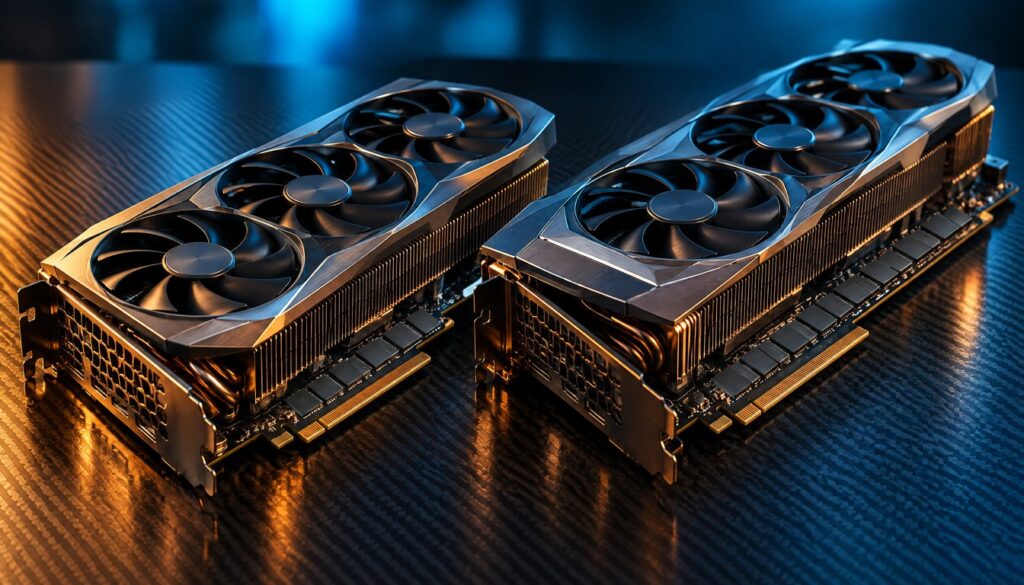
A fresh wave of GPU rumors landed this week, and this time the number everyone is repeating is 24. Six hardware outlets, citing the Taiwanese supply-chain site BenchLife, now say Nvidia is preparing a 24GB version of the GeForce RTX 5080 for Q1 2027. Notebookcheck, Wccftech, PCM Race, Startup Fortune, ThePCEnthusiast and a Chinese report via 163.com all published variations of the claim between October 10 and October 14, 2026. Nvidia has confirmed none of it.
That single detail, a doubled memory load on the second-tier Blackwell card, is doing a lot of work in the rumor mill right now. Some outlets frame the RTX 5080 24GB as a direct response to reported RTX 5090 supply troubles. Others call it a mid-cycle refresh aimed at AI hobbyists running local language models. None of them have a confirmed spec sheet, a price, or a product name from Nvidia itself. Here is what the reporting actually says, what the company has verified, and where the gaps are.
What the new reports actually claim
Wccftech reported on October 12 that Nvidia is targeting Q1 2027 for a 24GB GeForce RTX 5080 built around GDDR7 memory, citing BenchLife as its original source. The piece says the new card is meant to replace the existing 16GB RTX 5080 rather than sit alongside it. PCM Race repeated the same claim the next day and added that board partners had reportedly received verbal notice but were still waiting on formal documentation from Nvidia, which is a meaningfully weaker form of confirmation than a spec sheet.
Notebookcheck picked up the story on October 13 and updated it again on October 14, framing the card as one that could become Nvidia’s most powerful available GeForce GPU if the RTX 5090 is pulled from sale in the meantime. Startup Fortune went further, claiming board partners such as MSI already have RTX 5080 Super hardware with 24GB of GDDR7 built and ready, though it also said the launch has slipped three times and is now tracking toward a CES 2027 reveal in Las Vegas. None of these outlets claim to have seen an Nvidia roadmap document.
A second sourcing chain, not a repeat of last week’s rumor
This is a different rumor thread than the one that drove headlines on October 10 and 11, when leakers MEGAsizeGPU and hongxing2020 posted that Nvidia had cut GB202 chip allocation to the RTX 5090 entirely, redirecting the silicon toward RTX Pro workstation cards (shattered.io covered that story in detail). That earlier chain ran through TechPowerUp, VideoCardz and TweakTown, and it centered on an alleged factory notice ending RTX 5090 sales outright.
This week’s reports instead trace back to BenchLife, a supply-chain outlet with a mixed track record on GPU timing, and the two stories only overlap at one point: both assume the RTX 5080 24GB would need to exist because the RTX 5090 is getting harder to buy. The specific detail that is new this week is the memory architecture. Wccftech and the 163.com report both describe the card using eight 3GB GDDR7 modules in place of the current eight 2GB modules, doubling capacity without changing the physical module count.
The RTX 5080 Super naming problem
Earlier leaks called this card the RTX 5080 Super, and Startup Fortune still uses that name. But the Chinese-language report via 163.com says Nvidia may drop the Super branding entirely because of memory-allocation difficulties, suggesting the card could simply ship as a revised RTX 5080 instead of a distinct Super tier. Wccftech and Notebookcheck both describe it with generic language, a 24GB GeForce RTX 5080, rather than committing to the Super name.
That naming confusion matters for buyers trying to plan a purchase. A Super-branded card typically signals a mid-cycle refresh with higher clocks or more cores alongside the memory bump. A quiet 24GB revision of the existing RTX 5080 would suggest Nvidia is only addressing capacity, leaving the rest of the card, its CUDA core count, clocks and power draw, untouched. No report currently confirms which path Nvidia is taking.
Rumor timeline: who said what, and when
| Date | Outlet | Core claim |
|---|---|---|
| Oct 10, 2026 | ThePCEnthusiast | RTX 5090 production may be ending; RTX 5080 Super 24GB targeted for early 2027 |
| Oct 12, 2026 | Wccftech | 24GB GDDR7 RTX 5080 targeted for Q1 2027, citing BenchLife; likely to replace the 16GB model |
| Oct 12-13, 2026 | PCM Race | Repeats BenchLife claim; says board partners got verbal notice, no formal paperwork yet |
| Oct 13, 2026 | Notebookcheck | 24GB RTX 5080 could become Nvidia’s most powerful available GeForce card if RTX 5090 disappears |
| Oct 13-14, 2026 | Startup Fortune | Says MSI already has RTX 5080 Super 24GB hardware ready; launch slipped toward CES 2027 |
| Oct 13, 2026 | 163.com (Chinese) | Card may drop the “Super” name due to memory-allocation issues |
What Nvidia has actually confirmed
Strip away the rumor layer and Nvidia’s own published record is narrow but solid. The company’s official Blackwell GeForce RTX 50 series announcement lists the GeForce RTX 5080 with 16GB of GDDR7 memory, a 256-bit bus, 10,752 CUDA cores, and a 2.62GHz boost clock. The card draws 360W of total graphics power and Nvidia recommends an 850W system power supply. Nvidia announced the desktop RTX 5080 would launch January 30, 2025, at a starting price of $999, and board partner listings such as the MSI GeForce RTX 5080 16G Gaming Trio OC White confirm those specs are still what ships today.
A 24GB RTX 5080 does not appear on Nvidia’s site, in any investor filing, or in any board-partner product brochure, including the current PNY RTX 5080 16GB brochure. Every number tied to the rumored card, the Q1 2027 window, the eight 3GB modules, the Super name, comes from supply-chain sourcing rather than an Nvidia statement.
Spec comparison: RTX 5080 16GB, the rumored 24GB card, and RTX 5090
| Spec | RTX 5080 (official, 16GB) | RTX 5080 24GB (rumored) | RTX 5090 (official, 32GB) |
|---|---|---|---|
| Memory | 16GB GDDR7 | 24GB GDDR7 (unconfirmed) | 32GB GDDR7 |
| Memory modules | 8x 2GB | 8x 3GB (reported) | higher module count |
| Memory bus | 256-bit | Not reported | 512-bit |
| CUDA cores | 10,752 | Not reported | 21,760 |
| Boost clock | 2.62GHz | Not reported | 2.41GHz |
| Total graphics power | 360W | Not reported | 575W |
| Launch price | $999 (Jan 30, 2025) | No confirmed figure | $1,999 (launch) |
That gap in the middle row is the whole story. Reports agree on one number, 24GB, and disagree or stay silent on everything else. A card with the current RTX 5080’s core count and clocks but double the memory would behave almost identically in most games, since VRAM capacity rarely bottlenecks frame rates until a title’s texture budget actually exceeds the card’s memory. It would matter far more for workloads that load large models into memory and keep them there.
Why eight 3GB modules change the math, not the architecture
The reported path to 24GB does not require Nvidia to redesign the RTX 5080’s memory bus. Swapping eight 2GB GDDR7 packages for eight 3GB packages in the same physical layout gets to 24GB without touching the 256-bit interface, at least on paper. That is a comparatively cheap way to raise capacity, which is probably why the rumor keeps resurfacing even as other details shift between reports. It also explains why outlets keep saying bandwidth and bus width are unchanged while refusing to commit to a CUDA core count or clock speed, because neither detail follows automatically from a memory package swap.
Higher-density GDDR7 packages have been in development across the memory industry for specifically this kind of mid-cycle VRAM bump, and Nvidia has used similar module swaps before on workstation-class cards. What none of the current reporting establishes is whether Nvidia would charge a premium purely for the memory increase or treat it as a straight replacement at the existing $999 price point.
Pricing speculation, and why no number has stuck
No outlet in this round of reporting has published a credible MSRP for the 24GB card. The current RTX 5080 launched at $999, and a 24GB version using higher-density, likely pricier GDDR7 packages could reasonably land above that figure, but that is an inference from memory economics, not a sourced number. Reports describing the card as a potential RTX 5090 replacement are talking about market positioning, not confirmed pricing, and it would be a mistake to read “most powerful available GeForce GPU” as a promise of RTX 5090-level pricing or performance.
Anyone budgeting for a 2027 GPU purchase around this rumor is working from a single confirmed fact, 24GB of memory, and should treat every dollar figure attached to it as a guess until Nvidia says otherwise.
The GB202 supply question behind the RTX 5090
Several of this week’s reports lean on an assumption that connects back to Nvidia’s large GB202 die, the chip that powers the RTX 5090. Earlier October reporting, which shattered.io covered when the claims first surfaced, described Nvidia redirecting GB202 silicon toward the professional RTX Pro lineup, where demand and margins are both higher than in gaming. If that reallocation is real, a 24GB RTX 5080 built on the smaller GB203 die would give Nvidia a way to offer a higher-capacity consumer card without competing with RTX Pro for the same wafers.
That is a coherent business explanation, but it remains an inference stacked on top of two separate unconfirmed rumors rather than a documented Nvidia decision. Nvidia has not issued a statement confirming RTX 5090 discontinuation, GB202 reallocation, or any decision to position the 24GB RTX 5080 as a consumer flagship.
Historical context: the x80 tier has never carried 24GB before
Nvidia has never shipped a mainstream x80-tier GeForce card with 24GB of memory. The RTX 4080 topped out at 16GB. The RTX 3080 launched with 10GB and later got a 12GB variant. The RTX 2080 shipped with 8GB, and the GTX 1080 before it carried 8GB as well. Nvidia has sold 24GB consumer cards before, the RTX 3090 and RTX 4090 both carried that capacity, but always at the top of the stack, priced and positioned as the flagship, not as a mid-tier refresh.
That history is part of why this rumor reads as unusual rather than routine. A 24GB x80 card would blur a line Nvidia has kept consistent for several generations, between the memory capacity gamers get and the memory capacity reserved for the card that costs twice as much.
Competitive pressure from AMD’s existing 24GB options
AMD already sells a 24GB consumer card, the Radeon RX 7900 XTX, and has held that capacity advantage over Nvidia’s x80 tier since that card launched. AMD’s current mainstream competitor to the RTX 5080, the Radeon RX 9070 XT, ships with 16GB of GDDR6 and has carved out a price-to-performance reputation against Nvidia’s card, a gap we broke down when we compared the RTX 5070 Ti against the RX 9070 XT. Even AMD’s lower-tier RX 9070 GRE, which recently discounted to $569.99, keeps memory capacity as one of its selling points against pricier Nvidia cards.
None of that forces Nvidia’s hand directly, GeForce cards sell on more than VRAM, but it does mean a 16GB RTX 5080 facing a $999 price tag next to a 24GB RX 7900 XTX at a lower street price is a weaker argument for Nvidia going into 2027 than it was in January 2025. A 24GB RTX 5080 would close that specific gap without requiring Nvidia to touch pricing on the RTX 5090.
Why VRAM capacity is suddenly the headline spec
Two separate trends are pushing memory capacity back into the spotlight after years of clock speed and core count dominating GPU marketing. The first is gaming itself: high-resolution texture packs, path tracing, and open-world titles with heavy mod support have been creeping past 16GB at 4K settings on recent releases. The second, newer trend is local AI inference. Running larger language models or image generators directly on a consumer GPU, rather than through a cloud API, rewards whatever card can fit the largest model weights in memory at once, and 16GB is now a real ceiling for hobbyists experimenting with bigger open-weight models.
That second trend is almost certainly why Startup Fortune framed its report around AI eating the memory. It is a plausible commercial reason for Nvidia to revisit the RTX 5080’s capacity even if the card’s raw gaming performance barely moves, since a 24GB card would open the door to AI workloads that only the pricier RTX 5090 can currently handle well.
Market impact: what this means for buyers right now
For anyone shopping today, the practical takeaway is simple: nothing about the current RTX 5080 16GB has changed, and no retailer has an order page for a 24GB version. Buyers who need a card now should judge the 16GB RTX 5080 on its existing, Nvidia-confirmed specs rather than waiting on a card with no price, no firm release date, and no name Nvidia has signed off on. The Lowyat.NET write-up of the alleged Q1 2027 window is a useful snapshot of just how thin the sourcing is even among outlets repeating the same BenchLife claim.
For retailers and board partners, the bigger risk is the same one that hit the RTX 5090 narrative earlier in October, where Nvidia and AMD graphics card prices in Europe had already surged amid supply constraints before any of this month’s rumors broke. A second cycle of will-it-won’t-it coverage about a flagship-adjacent card tends to freeze some buyers in place, which can ripple into retailer inventory decisions well before Nvidia says anything official.
Predictions: where this rumor goes next
- Expect Nvidia to stay silent through the rest of Q4 2026, consistent with how it has handled every prior Blackwell refresh rumor this year.
- CES 2027 in January is the most likely venue for any official confirmation or denial, given Startup Fortune’s reported slip toward that event.
- If the card ships, expect it to carry the plain RTX 5080 name rather than Super branding, based on the memory-allocation concerns raised in Chinese-language reporting.
- Pricing above $999 is more likely than a straight replacement at the same price, given the cost of higher-density GDDR7 packages, though no outlet has confirmed a figure either way.
- Watch AMD’s response closely. A confirmed 24GB RTX 5080 would put fresh pressure on AMD to extend 24GB availability further down its own lineup.
Frequently asked questions
Is the RTX 5080 24GB confirmed by Nvidia?
No. Nvidia has not announced, listed, or confirmed a 24GB version of the GeForce RTX 5080. Every detail comes from supply-chain reporting, primarily traced back to BenchLife.
When would the RTX 5080 24GB launch?
Reports point to Q1 2027, with Startup Fortune specifically naming a possible CES 2027 reveal in January. That timeline is sourced to leaks and board-partner chatter, not an Nvidia roadmap.
Is it called the RTX 5080 Super?
That name has circulated in earlier leaks and in some current reports, but a Chinese-language report via 163.com says Nvidia may drop the Super branding because of memory-allocation difficulties. The final name is unconfirmed.
How much will the RTX 5080 24GB cost?
No outlet has published a credible price. The current RTX 5080 16GB launched at $999 in January 2025, and a 24GB version would likely cost more given pricier memory, but that is an inference, not a sourced figure.
Is the RTX 5090 really being discontinued?
Reports from October 10 and 11, 2026 claimed Nvidia was cutting GB202 chip supply to the RTX 5090 in favor of RTX Pro workstation cards. Nvidia has not confirmed that claim, and it remains a separate, unverified rumor thread that this week’s RTX 5080 24GB reports lean on for context.
Has Nvidia ever sold a 24GB x80-tier card before?
No. Nvidia’s past 24GB consumer cards, the RTX 3090 and RTX 4090, both launched at the top of the lineup. The RTX 4080 topped out at 16GB, and earlier x80 cards carried even less memory.
Does more VRAM actually improve gaming performance?
Only once a game’s memory needs exceed the card’s existing capacity. A 24GB RTX 5080 with the same core count and clocks as the current 16GB model would likely perform close to identically in most games today, with its main advantage showing up in texture-heavy titles at 4K and in AI workloads that need to hold large models in memory.