
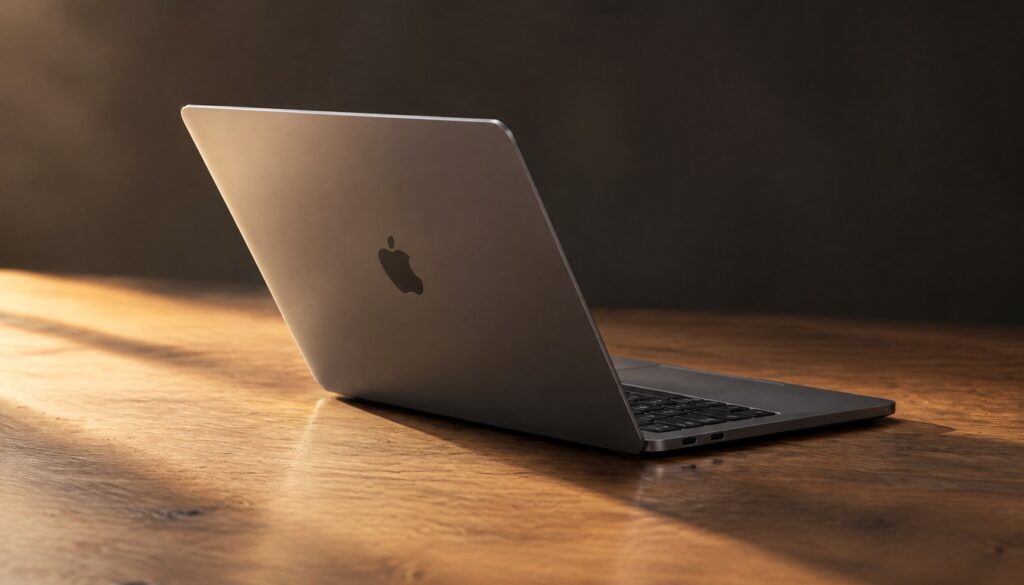
Apple quietly rewrote a corner of its product history on October 14, 2026. The company added the MacBook (Retina, 12-inch, 2017), the iPad (6th generation), and BeatsX headphones to its vintage and obsolete products list, moving all three into the “obsolete” tier. The update, first flagged by 9to5Mac and confirmed by MacRumors, closes the book on hardware service for a laptop that a lot of people still remember fondly: the fanless, one-port 12-inch MacBook that tried to prove a notebook could run without a cooling fan at all.
This is not a recall, a lawsuit, or a security notice. It is a routine administrative update that Apple runs continuously, and most people never see it happen. But this particular update lands differently, because the 12-inch MacBook was a genuinely distinctive machine, and its exit from serviceability marks the end of a design experiment Apple never repeated. Here is what changed, why it changed now, and what it means for anyone still holding one of these three products.
What Apple Actually Changed on October 14, 2026
Apple maintains a running list of products it classifies as “vintage” or “obsolete,” and it updates that list several times a year as more devices cross the relevant age thresholds. On October 14, three products crossed into the obsolete tier: the MacBook (Retina, 12-inch, 2017), the iPad (6th generation) in both Wi-Fi and Wi-Fi + Cellular configurations, and BeatsX headphones across their released finishes, including Burned Red, Defiant Black-Red, Deep Black, Pure White, and Sky Blue.
Apple’s own definition, cited by both 9to5Mac and MacRumors, is specific: a product becomes “vintage” when Apple stopped distributing it for sale more than five years ago but less than seven, and it becomes “obsolete” once that gap passes seven years. The practical effect of crossing into obsolete status is blunt. Apple states that it “discontinues all hardware service for obsolete products, and service providers cannot order parts for obsolete products.” There is no appeal process and no grace period once a device hits that line.
That single sentence is the whole story, mechanically. But the reason it is getting attention is the specific product on the list. The 12-inch MacBook was not just another aging laptop. It was Apple’s most aggressive bet on minimalism in the Mac lineup, and this move effectively closes the chapter on official support for that entire design.
Why the 12-Inch MacBook Still Matters in 2026
The 12-inch Retina MacBook line launched in 2015 as Apple’s statement piece: a fanless, ultra-thin laptop built around a single USB-C port that handled charging, display output, and data transfer all at once. Reviewers at the time were split, loving the design and hating the single-port compromise and the butterfly keyboard mechanism that became a long-running sore point for Apple’s notebook lineup. Apple kept refining the machine through several revisions, and the 2017 edition was the last one made before Apple folded the line into the broader MacBook Air strategy and discontinued it in 2019.
That 2019 discontinuation date is the number that actually drives today’s news. Apple’s obsolete threshold is seven years from the date a product stopped being sold, not seven years from launch. Run the math from 2019 and you land exactly on 2026, which is why this specific model crossed the line this month rather than, say, two or three years ago. It is a clean, almost mechanical outcome of a service policy that has nothing to do with how beloved or unusual the hardware was.
For context on how Apple’s hardware strategy has evolved since that single-port experiment, look at where the company has pushed unified memory and bandwidth on its current silicon. Our coverage of the M5 Pro and M5 Max Fusion chip architecture shows just how far the Mac has moved from “one port, no fan” toward multi-die designs built for sustained throughput, a complete reversal of the minimalism the 12-inch MacBook represented.
Vintage vs Obsolete: Apple’s Two-Tier Service Clock
Apple’s policy divides aging hardware into two distinct zones, and the difference between them is not subtle. In the vintage window, five to seven years after a product’s last sale date, Apple and Apple Authorized Service Providers can still repair the device, though availability depends on whether parts remain in stock and on regional legal requirements. Once a product crosses into the obsolete zone past seven years, that door closes entirely. Apple will not service it, and its authorized network cannot order replacement parts for it either.
There is one specific carve-out worth knowing about: Mac laptops, including obsolete ones, may still qualify for battery-only service for up to ten years after Apple stopped distributing them, subject to parts availability. That is a narrow exception, not a general reprieve, and it only covers the battery, not logic boards, displays, keyboards, or other components. Everything else on an obsolete Mac is on its own.
This two-tier system is not new, and Apple has run versions of it for years. What changes is the roster of devices it applies to, on a rolling basis, as each product’s sale-stop date works its way past the five-year and seven-year marks. The October 14 update is simply the latest tick of that clock, applied to a 2017 MacBook, a 2018 iPad, and headphones first introduced earlier in the decade.
The Full List: What Joined the Obsolete Tier
| Product | Category | New Status (Oct. 14, 2026) | Hardware Service Available? |
|---|---|---|---|
| MacBook (Retina, 12-inch, 2017) | Notebook | Obsolete | No (battery-only exception may apply up to 10 years) |
| iPad (6th generation), Wi-Fi | Tablet | Obsolete | No |
| iPad (6th generation), Wi-Fi + Cellular | Tablet | Obsolete | No |
| BeatsX (Burned Red, Defiant Black-Red, Deep Black, Pure White, Sky Blue) | Audio | Obsolete | No |
Note that the 12-inch MacBook line itself had multiple model years, but the 2017 revision was the final one sold, which is why it is the specific unit named on the list rather than an earlier version. Owners of 2015 or 2016 12-inch MacBooks have been past the obsolete threshold for a while already, since those models stopped being sold even earlier.
This Is Not an Isolated Event: Apple’s 2026 Obsolescence Pattern
October’s update is the second major obsolescence wave of 2026, not the first. Back on March 31, Apple made a similar move, adding the 2017 MacBook Air, the fourth-generation iPad mini, and the Apple TV HD to the obsolete list, a change AppleInsider reported at the time. That means Apple has retired hardware service on at least six distinct products across two updates in 2026 alone, spanning three different product categories: Mac, iPad, and set-top hardware.
There is also a slightly older precedent worth noting. In August 2026, MacRumors reported that Apple had declared the iPhone X obsolete, and separately flagged the Retina MacBook Air for the same status. Put together, the pattern is consistent: Apple is steadily working through devices launched in the 2015-2019 window, retiring hardware service as each one crosses the seven-year mark from its last sale date. None of this is reactive. It is the predictable output of a published policy running on a predictable clock.
What makes this cycle noticeable to casual observers is less the policy and more the devices it is now reaching. 2015 through 2019 was a period when Apple shipped some of its most talked-about and most argued-over hardware: the butterfly keyboard era, the Touch Bar MacBook Pro, the iPhone X’s notch debut, and the single-port 12-inch MacBook. Those products are now aging out of service windows in bulk, and each one generates a fresh round of nostalgia-tinged coverage when it happens.
What Obsolete Status Actually Means for Owners
If you still own a 2017 12-inch MacBook, a 6th-generation iPad, or a pair of BeatsX, nothing changes about how the device works today. It still boots, it still runs whatever software it last supported, and it is not bricked, blocked, or disabled by this update. What changes is only the service path if something breaks.
Before October 14, a cracked 12-inch MacBook screen or a failed logic board could, in theory, still be referred to Apple or an authorized provider for parts-dependent repair under vintage status. After October 14, that path is closed. Apple will not take the repair, and authorized providers cannot order the parts even if they wanted to attempt one. The practical fallback, as AppleInsider noted when covering the March wave, is independent repair shops working with donor parts or whatever aftermarket inventory remains in circulation. That is a meaningfully different experience than an Apple Store repair, both in terms of consistency and in terms of warranty-adjacent protections.
Apple does offer a separate channel, its Self Service Repair program, but that program is scoped by Apple on a device-by-device basis and does not override the obsolete cutoff described above. It is a distinct mechanism, not a workaround for obsolete status, and its availability for any specific obsolete product is determined by Apple rather than guaranteed by the vintage-and-obsolete policy itself.
How the 12-Inch MacBook Compares to What Apple Sells Now
The contrast between the 2017 12-inch MacBook and Apple’s current notebook lineup is less about raw speed and more about what the company decided minimalism should mean. The 12-inch MacBook’s single-port design was a bet that most users did not need multiple ports, a bet Apple backed away from almost immediately in its Pro lineup and has not revisited on any Mac since. Today’s Mac strategy runs in the opposite direction: more ports, more sustained thermal headroom, and chip designs built explicitly to avoid the throttling complaints that dogged the fanless 12-inch machine.
That shift is visible across Apple’s current chip roadmap. Coverage of the M5 Max Mac Studio’s gaming benchmarks and the 36-core M5 Ultra’s bandwidth gains both point to a company now optimizing for sustained, fan-cooled performance ceilings rather than the silent, compromise-heavy approach the 12-inch MacBook took. It is a useful reminder of how much Apple’s own design philosophy has moved in less than a decade.
| Product | Last Sold | Years Until Obsolete | Defining Design Choice |
|---|---|---|---|
| MacBook (Retina, 12-inch, 2017) | 2019 | 7 years (2026) | Single USB-C port, no fan |
| iPad (6th generation) | 2019 | 7 years (2026) | Entry tablet, Apple Pencil (1st gen) support |
| BeatsX | Pre-2019 (exact date not specified by Apple) | 7 years (2026) | Flex-form wireless neckband earphones |
| 2017 MacBook Air (for comparison) | Added obsolete, March 2026 | 7 years (2026) | Pre-Retina chassis, last Intel-era Air refresh |
There is also a useful comparison point in how NVIDIA frames its own hardware longevity claims right now. Our report on the NVIDIA RTX Spark launch notes the company explicitly targeting Apple’s unified-memory lead in local AI workloads, a reminder that hardware lifecycle pressure in 2026 is not limited to Apple’s own repair policy. Every major hardware vendor is now managing a tension between supporting older devices and pushing buyers toward newer architectures.
The Repair Industry’s View on Rolling Obsolescence
Independent repair shops have long argued that manufacturer-run obsolescence lists create a structural disadvantage: once official parts supply chains close, repair quality and availability become dependent on salvage and aftermarket channels that are inherently less consistent. That dynamic is exactly what AppleInsider pointed to when it covered the March 2026 obsolescence wave, noting that owners of the newly obsolete Apple TV HD and iPad mini 4 would need to lean on third-party repair shops going forward, since Apple’s own channel was no longer an option.
It is worth being precise about what is and is not established here. Apple has not published a statement framing this October update as part of a broader strategic shift, and no named analyst commentary on the specific policy implications of the October 14 update was available in the reporting reviewed for this piece. What is established, directly from Apple’s own service terms, is the mechanical sequence: products cross the seven-year threshold, and service access closes. Whatever broader strategic reading anyone wants to apply to that sequence is a separate conversation from the facts Apple has actually published.
Right to Repair Pressure Meets a Predictable Policy
Apple’s vintage-and-obsolete framework exists in a regulatory environment that has gotten considerably more aggressive about device longevity over the past few years. Several US states have passed right-to-repair legislation, and the EU has pushed its own rules around parts availability and repairability scoring. Apple’s seven-year obsolete cutoff and its narrower, Mac-specific ten-year battery exception both read as responses to that pressure, even though Apple frames them purely as internal service-tier definitions rather than regulatory compliance measures.
The tension is real either way. A seven-year service cutoff is generous compared to some consumer electronics categories, where manufacturer support can lapse in two or three years. But it sits awkwardly next to a growing expectation, driven by sustainability advocates and right-to-repair groups alike, that premium hardware priced at Apple’s level should be serviceable for a decade or more. The 12-inch MacBook, in particular, launched at a premium price point and was marketed on build quality, which makes its seven-year service cutoff a useful test case for that broader argument.
What This Means for the Secondhand Market
Obsolete status tends to have a measurable, if modest, effect on resale values once buyers realize official repair is off the table. A MacBook listed as obsolete is a riskier secondhand purchase than one still inside its vintage window, because any hardware failure after purchase has no Apple-backed repair path. Sellers on platforms like eBay and Swappa typically see asking prices soften for newly obsolete Apple hardware within weeks of a list update becoming widely reported, as buyers factor in the lost service safety net.
For the iPad 6th generation specifically, the effect may be smaller, since that model was already aging out of current iPadOS software support separately from Apple’s service classification. Software support and hardware service obsolescence are governed by different Apple policies entirely, and a device can lose one well before the other. The BeatsX case is arguably the cleanest example on this list: a wireless accessory with no software ecosystem dependency, where obsolete status is purely about whether a frayed cable or a dead battery can be serviced at all.
Historical Context: Apple’s Service Policy Since 2013
Apple’s current vintage-and-obsolete framework has been in place in some form for over a decade, and the company updates the list multiple times a year rather than on a fixed annual schedule. What is notable about 2026 specifically is the volume: two confirmed waves (March and October) covering six named products across three categories, plus the separate iPhone X and Retina MacBook Air additions reported in August. That is a busier obsolescence calendar than Apple has run in several prior years, largely because the 2015-2019 product generation, one of Apple’s most prolific release periods, is now moving through the seven-year window in bulk.
That bulk effect is mechanical rather than strategic. Apple released an unusually wide range of new form factors during that five-year stretch, including the 12-inch MacBook, the Touch Bar MacBook Pro, the iPhone X, and a redesigned iPad mini. All of it is now aging out of service eligibility on roughly the same timeline, simply because it all launched around the same time. Expect the obsolescence list to stay busy through 2027 and 2028 for the same reason, as the remaining 2016-2019 hardware works through the same seven-year clock.
Predictions: Where This Trend Goes Next
- Expect at least one more obsolescence wave before the end of 2026, likely touching 2017-era iPhone or iPad models that have not yet crossed the seven-year mark.
- The Touch Bar-era MacBook Pro lineup (2016-2019) is a strong candidate for obsolete status within the next 12 to 24 months, given how much attention that keyboard generation already draws from repair communities.
- Right-to-repair legislation in additional US states will keep pressure on Apple to either extend parts availability windows or publish clearer justification for the seven-year cutoff, though Apple has given no indication it plans to change the policy itself.
- Secondhand marketplace pricing for newly obsolete Apple hardware will likely continue to soften modestly in the weeks immediately following each list update, as resale buyers price in the lost service path.
- Apple will almost certainly continue running these updates quietly, without press announcements, relying on outlets like 9to5Mac and MacRumors to surface each change rather than publicizing it directly.
The Bigger Picture: Apple’s Hardware Lifecycle Strategy
None of this changes how Apple designs new hardware, but it does say something about how the company manages the long tail of everything it has already sold. Apple’s current chip strategy, visible in products discussed in our coverage of the M6 versus M5 generational comparison, leans heavily on long-term software support and sustained performance rather than the kind of singular design risk the 12-inch MacBook took. That is arguably a direct lesson from the 12-inch MacBook era: distinctive hardware bets can become expensive to support a decade later, both for Apple and for the owners stuck without a repair path once the clock runs out.
It is also worth noting that Apple’s broader hardware ambitions have not slowed down while this list quietly grows. The company’s recent move into home hardware, detailed in our piece on Apple HomeView’s $299 launch, shows Apple still willing to take design risks on new categories even as it manages the service tail of past ones. The obsolescence list and the new-product pipeline run on completely separate tracks, and this week’s news is a reminder that both are always moving at once.
Frequently Asked Questions
Does obsolete status mean my MacBook, iPad, or BeatsX will stop working?
No. Obsolete status only affects Apple’s hardware service and parts availability. The device itself continues to function exactly as it did before the classification changed.
What is the exact difference between vintage and obsolete at Apple?
Vintage covers products Apple stopped selling five to seven years ago, where repair may still be possible depending on parts. Obsolete covers products past the seven-year mark, where Apple discontinues all hardware service and authorized providers cannot order parts.
Can I still get my 12-inch MacBook’s battery replaced?
Possibly. Apple allows battery-only service on Mac laptops for up to ten years after the sale-stop date, subject to parts availability, even after the device is otherwise classified obsolete. This exception does not extend to other components.
Why did the 2017 MacBook become obsolete now instead of earlier?
Apple’s obsolete threshold counts from the date a product stopped being sold, not from its release date. The 2017 12-inch MacBook was discontinued in 2019, and 2019 plus seven years lands on 2026.
What other Apple products have gone obsolete in 2026?
In March 2026, Apple added the 2017 MacBook Air, the 4th-generation iPad mini, and the Apple TV HD to the obsolete list. Separately, the iPhone X and the Retina MacBook Air were reported obsolete in August 2026.
Where can I repair an obsolete Apple device if Apple won’t service it?
Independent repair shops are the main option, typically relying on salvaged donor parts or remaining aftermarket inventory, since Apple-authorized providers cannot order new parts for obsolete products.
Does obsolete status affect software updates separately from hardware repair?
Yes, software support (operating system updates) and hardware service eligibility are governed by separate Apple policies. A device can lose one before the other, and the October 14 update concerns hardware service only.
Is this the first time BeatsX has appeared on an Apple obsolescence list?
The October 14, 2026 update is when BeatsX, across its released finishes including Burned Red, Defiant Black-Red, Deep Black, Pure White, and Sky Blue, joined the obsolete tier, according to Apple’s updated list.